


How to Clean Steel Outdoor Furniture Without Damaging the Powder Coating?

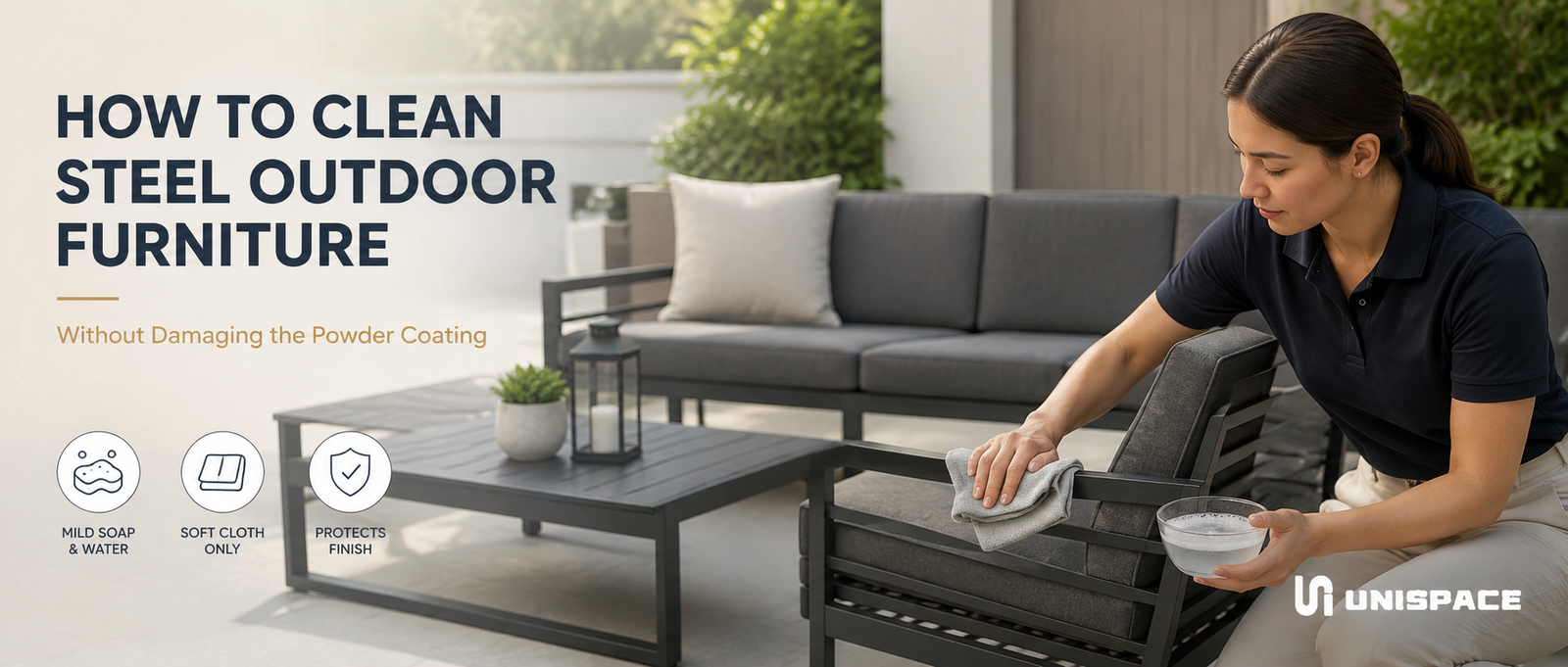
Steel outdoor furniture is strong, stable and widely used in gardens, patios, restaurants, hotels and commercial outdoor spaces. But even powder coated steel outdoor furniture needs proper cleaning. The goal is not only to remove dust, but also to protect the coating surface, reduce rust risk and support long-term outdoor furniture maintenance.
Quick Contents
- Why Steel Outdoor Furniture Needs Proper Cleaning
- What You Need to Clean Steel Outdoor Furniture
- Step-by-Step Guide: How to Clean Steel Outdoor Furniture
- How to Clean Powder Coated Steel Outdoor Furniture
- Common Cleaning Mistakes That Can Damage Steel Outdoor Furniture
- How Often Should You Clean Steel Outdoor Furniture?
- Manufacturer Tips for Longer-Lasting Steel Outdoor Furniture
- FAQ
1. Why Steel Outdoor Furniture Needs Proper Cleaning
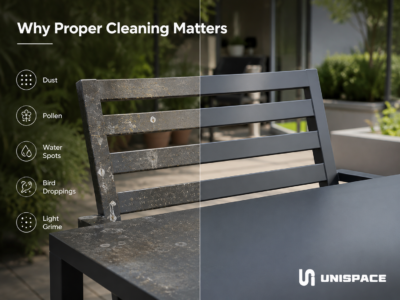
Outdoor furniture is exposed to dust, rainwater, pollen, tree sap, bird droppings, pool chemicals and, in coastal areas, salt mist. These elements may look harmless at first, but if they remain on the surface for a long time, they can shorten coating life and affect the appearance of steel outdoor furniture.
Correct cleaning helps remove contaminants before they become stubborn stains. It also gives buyers and users a chance to check scratches, loose hardware, coating chips, water accumulation and hidden areas around joints and welded parts.
For B2B buyers, cleaning performance is also a product quality signal. Well-designed metal outdoor furniture should be easy to wipe, easy to drain and easy to maintain in real outdoor environments.
2. What You Need to Clean Steel Outdoor Furniture
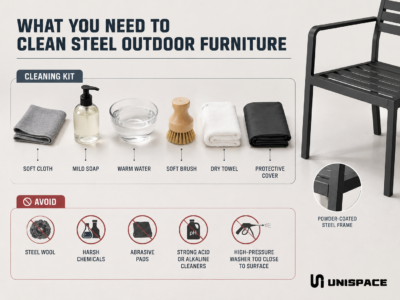
To clean steel outdoor furniture safely, use simple and gentle tools: a soft cloth, mild soap, warm water, a soft brush and a dry towel. A protective cover is also useful when furniture is not used for long periods.
Avoid steel wool, metal brushes, abrasive pads, strong acid or alkaline cleaners and harsh chemicals. These may scratch the powder coating, dull the surface or expose the steel underneath.
A high-pressure washer should also be used carefully. If the pressure is too strong or the nozzle is too close, it may damage joints, seams, cushions or coating edges. For routine outdoor furniture maintenance, mild soap and water are usually enough.
| Recommended Tools | Tools to Avoid |
|---|---|
| Soft cloth | Steel wool |
| Mild soap | Metal brush |
| Warm water | Abrasive pads |
| Soft brush | Strong acid or alkaline cleaners |
| Dry towel | Harsh chemicals |
| Protective cover | High-pressure washer too close to the surface |
3. Step-by-Step Guide: How to Clean Steel Outdoor Furniture
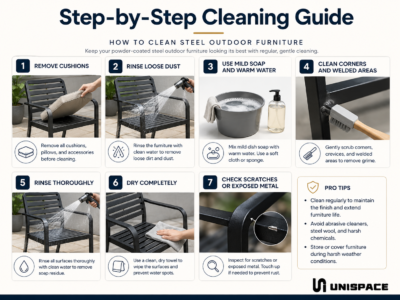
The best way to clean steel outdoor furniture is to work gently and systematically. First, remove cushions, pillows and accessories. Shake off loose dust and check whether the cushion covers need separate cleaning.
Second, rinse loose dust and dirt with clean water. Then mix mild soap with warm water and wipe the powder coated steel frame with a soft cloth. For corners, joints and welded areas, use a soft brush instead of a hard metal tool.
After cleaning, rinse thoroughly to remove soap residue. Finally, dry the frame completely with a clean towel. This step is important because water left around screws, tube openings or welded areas may increase corrosion risk over time.
- Remove cushions, pillows and accessories.
- Rinse loose dust and dirt with clean water.
- Use mild soap and warm water.
- Clean corners, joints and welded areas with a soft brush.
- Rinse thoroughly to remove soap residue.
- Dry the frame completely.
- Check scratches, chips or exposed metal.
4. How to Clean Powder Coated Steel Outdoor Furniture
Powder coating is one of the most common surface treatments for steel patio furniture and commercial outdoor furniture. It creates a protective layer over the steel frame and helps improve weather resistance, color stability and daily-use performance.
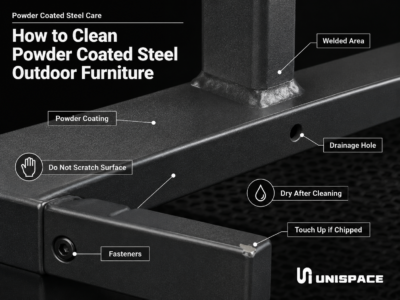
When cleaning powder coated outdoor furniture, the most important rule is to protect the coating. Do not scrape the surface, do not use corrosive cleaners and do not leave dirty water sitting on flat surfaces, seams or welded corners for long periods.
If the coating is chipped during transportation or daily use, repair it early. Once moisture reaches exposed steel, rust may begin underneath the damaged area. This is why cleaning and inspection should happen together.
5. Common Cleaning Mistakes That Can Damage Steel Outdoor Furniture
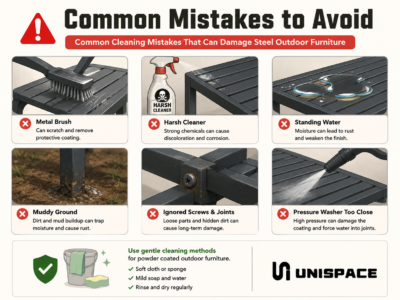
Many cleaning problems come from using the wrong method. A metal brush may remove stubborn dirt quickly, but it can also scratch the coating. Strong cleaners may make the surface look clean for a short time, but they can weaken the finish.
Another common mistake is not drying the frame after cleaning or rain. Water may collect near screws, feet, tube ends or welded areas. If the furniture is placed directly on wet soil or grass for a long time, the bottom of the frame may also be exposed to more moisture.
For long-term use, buyers should treat cleaning as part of product care, not only as a surface task. Good maintenance protects both appearance and structure.
| Cleaning Mistake | Possible Risk |
|---|---|
| Using a metal brush | Can scratch or remove the protective coating |
| Using strong chemicals | May cause discoloration or weaken the finish |
| Leaving standing water | May increase rust risk around seams and joints |
| Placing furniture on muddy ground | Can trap moisture around the frame base |
| Ignoring screws and joints | Hidden dirt and moisture may cause long-term damage |
| Using a pressure washer too close | May damage coating edges or force water into joints |
6. How Often Should You Clean Steel Outdoor Furniture?
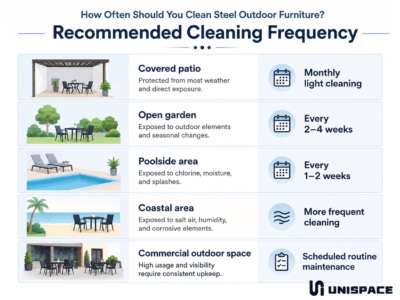
Cleaning frequency depends on exposure level. A covered patio may only need light monthly cleaning. An open garden may need cleaning every two to four weeks. Poolside furniture may need cleaning every one to two weeks because of moisture, sunscreen and chemical exposure.
Coastal areas require more attention because salt mist can stay on metal surfaces. Commercial outdoor spaces such as restaurants, hotels and cafés should create a regular maintenance schedule based on guest traffic and outdoor exposure level.
For importers and project buyers, maintenance guidance can be included in product manuals. This reduces after-sales questions and helps end users take better care of steel outdoor furniture.
| Use Scenario | Recommended Cleaning Frequency |
|---|---|
| Covered patio | Monthly light cleaning |
| Open garden | Every 2–4 weeks |
| Poolside area | Every 1–2 weeks |
| Coastal area | More frequent cleaning to remove salt mist |
| Commercial outdoor space | Scheduled routine maintenance based on traffic |
7. Manufacturer Tips for Longer-Lasting Steel Outdoor Furniture
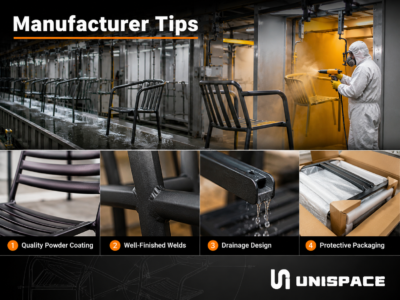
Longer service life starts before cleaning. It begins with the design and manufacturing process. As a metal outdoor furniture manufacturer, we look at tube thickness, welding quality, surface pretreatment, powder coating quality, drainage structure, hardware and packaging protection.
Good design should avoid unnecessary water traps. Welded areas should be smooth. Tube openings should be protected or designed with drainage in mind. Feet and glides should help lift the frame away from wet ground.
For B2B buyers, the right question is not only how to clean metal outdoor furniture. It is also whether the product was designed to be cleaned, maintained, packed and used outdoors for a long time.
| Manufacturer Detail | Why It Matters |
|---|---|
| Quality powder coating | Supports weather resistance and surface protection |
| Well-finished welds | Reduces weak points and hidden dirt buildup |
| Drainage design | Helps water leave the frame instead of collecting inside |
| Protective packaging | Reduces coating damage during export transportation |
8. FAQ
Can steel outdoor furniture be washed with water?
Yes. Clean water can be used for rinsing, but the frame should be dried afterward, especially around screws, joints and welded areas.
Can I use vinegar to clean steel patio furniture?
For powder coated steel, mild soap and water are usually safer. Vinegar is acidic and should be used carefully, especially on damaged or chipped coating.
How do you prevent steel outdoor furniture from rusting?
Keep the coating intact, clean the frame regularly, dry it after washing or rain, avoid long-term water pooling and repair coating chips early.
Is steel outdoor furniture suitable for coastal areas?
It can be suitable when the design, coating and maintenance plan match the environment. In coastal areas, more frequent cleaning is needed to remove salt mist.
Final Recommendation
Cleaning steel outdoor furniture properly is simple, but it should be done with care. Use mild soap, soft tools and clean water. Avoid abrasive cleaning methods, dry the frame completely and inspect the coating regularly.
For B2B buyers, maintenance also reflects product quality. A well-made powder coated steel frame should be designed for real outdoor use, easy cleaning, safe packaging and long-term durability. This is where manufacturing experience matters.

Explore More / Related Products
- Does Steel Outdoor Furniture Rust?
- Steel Outdoor Furniture Collection
- Outdoor Furniture Manufacturer / OEM & ODM
Explore more steel outdoor furniture, metal outdoor furniture and OEM/ODM outdoor furniture solutions from UNISPACE.