


Does Steel Outdoor Furniture Rust? Prevention, Coatings and Warranty

Why Steel Rusts Outdoors
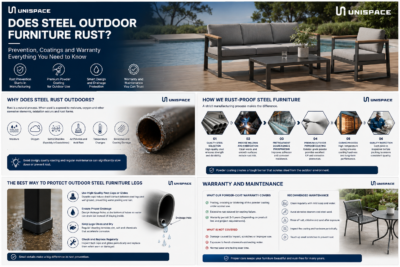
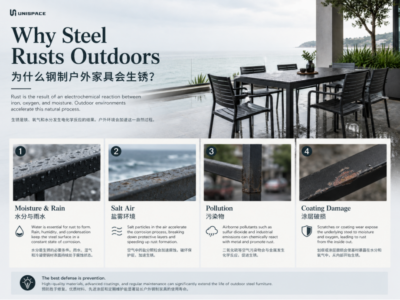
Rust forms through an electrochemical reaction. Water acts as an electrolyte, oxygen participates in the reaction, and iron is gradually converted into iron oxides. Chloride salts from sea air, swimming pools, de-icing salts, or contaminated cleaning water increase conductivity and can accelerate localized corrosion. Air pollution, acidic deposits, and repeated wet-dry cycles can also reduce coating life.
The first visible orange stain is often not the beginning of the problem. Corrosion may start under a scratch, around a poorly sealed weld, inside an undrained tube, or beneath a damaged foot cap. For that reason, a professional inspection should evaluate the complete frame rather than only the visible top surfaces.
Where Steel Outdoor Furniture Rust Usually Starts
In factory inspections and after-sales analysis, steel outdoor furniture rust most commonly begins at high-risk details:
- feet and lower leg sections that remain wet after rain or floor cleaning;
- weld seams that were not fully cleaned before coating;
- tube openings, screw holes, and drainage holes with incomplete coating coverage;
- stacking-contact points where repeated friction damages the finish;
- sharp edges where the powder film becomes thinner;
- scratches caused during assembly, transport, or daily use;
- enclosed tubes that trap condensation or rainwater.
This explains why two products with the same nominal powder-coat thickness can perform very differently. Film thickness matters, but edge coverage, pretreatment, curing, frame design, drainage, and transport protection are equally important.
How Manufacturers Rust-Proof Steel Outdoor Furniture
Buyers often ask how to rust proof steel outdoor furniture. The most reliable answer is not a single paint or chemical. It is a controlled manufacturing sequence.
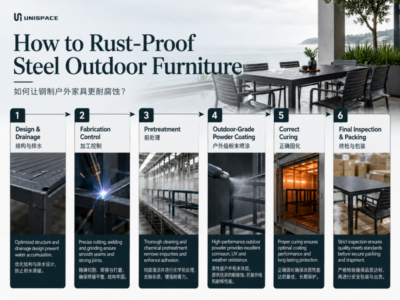
- Material and frame design. Tube dimensions must suit the expected load, while the frame should avoid water traps. Drainage holes belong at genuine low points after the product is placed in its normal operating position.
- Fabrication control. Welding spatter, sharp burrs, oil, and grinding dust must be removed. Continuous welds or correctly sealed joints reduce crevices where moisture can remain.
- Pretreatment. Degreasing and conversion pretreatment improve surface cleanliness and coating adhesion. Depending on the required corrosion class, manufacturers may use iron phosphate, zinc phosphate, alternative conversion coatings, electrophoretic primer, or another compatible primer system.
- Exterior-grade powder. Polyester powder is commonly selected for outdoor furniture because it offers better weathering performance than interior epoxy powders. A typical project may specify a cured film thickness of approximately 60-100 microns, although the correct range depends on the frame geometry, coating supplier, and acceptance criteria.
- Correct curing. Powder must reach the specified metal temperature for the specified time. An oven air-temperature reading alone does not prove complete cure. Under-cured coating can lose adhesion and chemical resistance, while excessive curing may affect color or film performance.
- Final inspection and packing. Adhesion, appearance, film thickness, drainage, hardware, and contact points should be checked before packing. Protective separators reduce abrasion during transport.
What Salt-Spray Hours Really Mean
Salt-spray testing is useful for comparing materials or coating systems under controlled conditions. ASTM B117 describes the operation of a salt-fog apparatus, while ISO 9227 covers neutral salt-spray and related methods. However, neither standard provides a universal formula that converts laboratory exposure hours into years of outdoor service.
A statement such as “500 hours” or “1,000 hours” is incomplete unless the buyer also knows the substrate, pretreatment, primer, powder type, film thickness, whether the sample was scribed, and the failure criteria. Salt-spray testing is best treated as a comparative quality-control tool, not a service-life calendar.
The Best Way to Protect Outdoor Steel Furniture Legs
The best way to protect outdoor steel furniture legs is to control both coating damage and standing water. Legs deserve special attention because they contact wet paving, soil, pool chemicals, cleaning products, and abrasive surfaces.
Use durable, replaceable foot caps or glides that do not trap water. Confirm that each cap fits securely without cutting through the powder coat. Position drainage holes so water can escape and keep them free from debris. Furniture should be lifted rather than dragged across concrete, stone, or rough decking.
If a chip exposes bare steel, clean and dry the area, remove loose corrosion, feather the surrounding coating, apply a compatible corrosion-resistant primer, and finish with matching exterior touch-up paint. Early repair is more effective than waiting for corrosion to spread beneath the coating.
Powder-Coat Warranty: What It Should and Should Not Cover
When customers ask, will steel outdoor furniture rust, they are often also asking who carries the risk if rust appears. A useful powder-coat warranty should define the product, coating system, warranty term, installation environment, maintenance obligations, exclusions, and remedy.
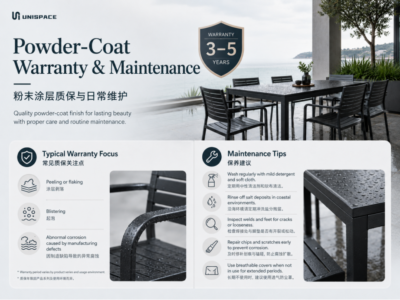
A coating warranty may reasonably address abnormal peeling, cracking, blistering, or excessive corrosion caused by a verified manufacturing defect. It normally should not promise that every exposed steel product will remain completely rust-free in every climate.
Common exclusions include impact damage, scratches, misuse, prolonged standing water, chemical exposure, uncleaned coastal salt deposits, unauthorized modification, normal color change, and ordinary wear. For B2B projects, the warranty should also state whether the remedy is touch-up material, replacement parts, repair, product replacement, or a capped credit, and who is responsible for freight and labor.
Maintenance That Extends Service Life
Powder coating reduces maintenance, but it does not eliminate it. A practical maintenance program includes:
- washing with fresh water and a mild, pH-neutral detergent;
- removing bird droppings, food, sunscreen, fertilizer, and salt deposits promptly;
- avoiding steel wool, abrasive pads, strong alkalis, acids, and unapproved solvent cleaners;
- keeping drainage holes open and replacing damaged glides;
- inspecting welds, feet, fasteners, and stacking points at least seasonally;
- repairing chips before visible corrosion expands;
- using breathable covers rather than sealing wet furniture beneath non-ventilated plastic;
- storing or securing furniture during severe storms and long periods of snow.
Inspection frequency should reflect exposure. A sheltered residential patio may need only seasonal attention, while a beachfront restaurant may require fresh-water rinsing weekly or after salt-heavy weather.
How Buyers Should Evaluate a Steel Furniture Supplier
A buyer should not evaluate corrosion resistance from a showroom sample alone. Ask the supplier to define the intended environment and provide the steel specification, tube wall thickness, pretreatment process, powder type, target film thickness, curing controls, drainage design, testing method, acceptance criteria, and warranty terms.
Also inspect the less visible details: the underside of the seat, inside corners, screw holes, weld transitions, feet, and tube ends. These areas reveal whether corrosion protection is built into the manufacturing process or added only as a surface-level sales claim.
From a manufacturing perspective, steel remains one of the most practical outdoor furniture materials because it combines rigidity, wind stability, design flexibility, repairability, and competitive cost. Its performance depends on engineering and process control, not on the material name alone.
Final Answer: Does Steel Outdoor Furniture Rust?
Yes, unprotected or damaged steel can rust outdoors. Properly designed and powder-coated steel furniture, however, can resist corrosion effectively and deliver long-term value. The decisive factors are frame design, drainage, surface preparation, coating selection, curing, handling, maintenance, and honest warranty terms.
The professional goal is not to claim that steel is chemically incapable of rusting. It is to prevent moisture and contaminants from reaching the substrate, detect damage early, and make maintenance straightforward for the customer.
Recommended Warranty Checklist
- Covered defects: Abnormal peeling, cracking, blistering, or excessive corrosion caused by a verified manufacturing defect.
- Exclusions: Impact damage, scratches, misuse, standing water, chemical exposure, unauthorized modification, normal fading, and ordinary wear.
- Environment: Residential, hospitality, poolside, coastal, or another exposure category should be stated.
- Maintenance: Cleaning method, inspection frequency, and touch-up responsibilities should be defined.
- Remedy: Touch-up material, replacement parts, repair, product replacement, or capped credit.
- Freight and labor: Responsibility for transport and installation costs should be stated clearly.
One thought on “Does Steel Outdoor Furniture Rust? Prevention, Coatings and Warranty”