


Thick Outdoor Sofa Cushions: Premium Look, Hidden Risks

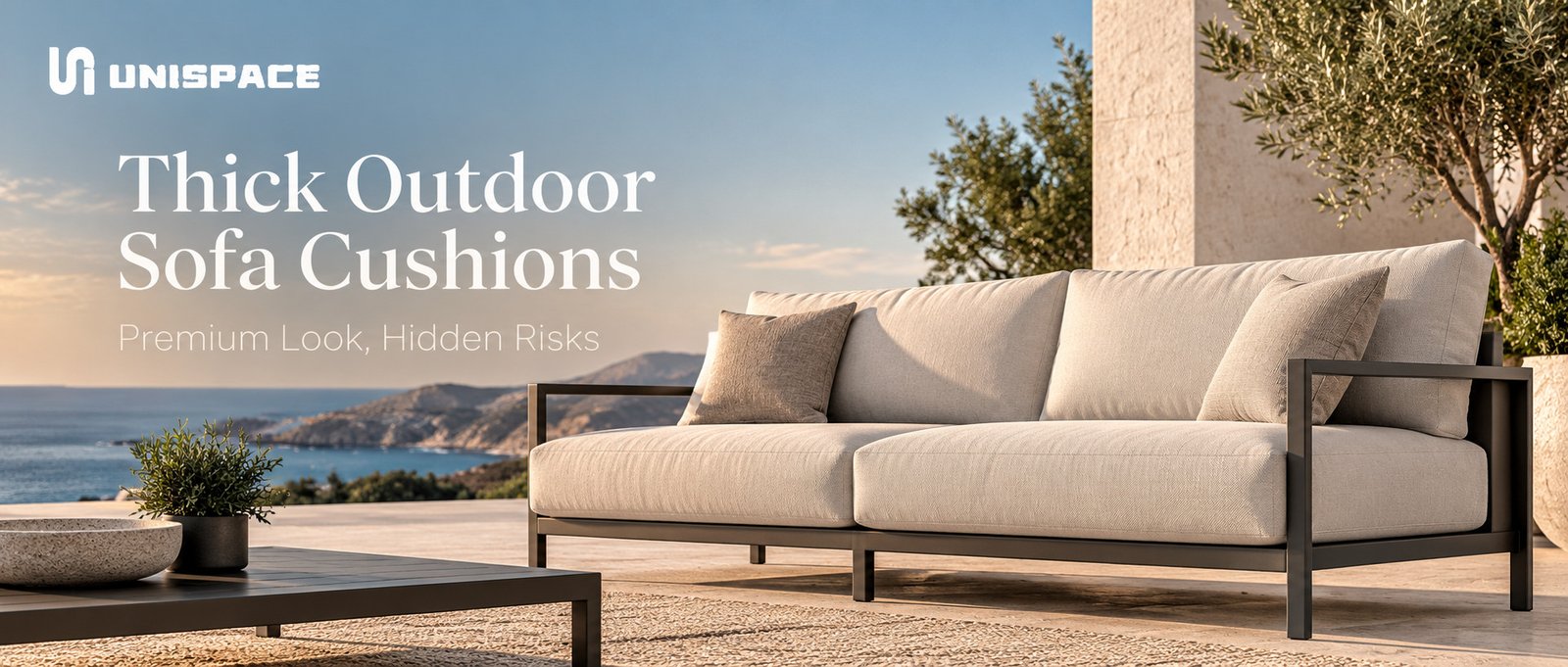
However, for furniture importers, wholesalers, and retail brands, cushion thickness involves more than aesthetics. It can affect shipping volume, foam recovery, moisture management, color consistency, and replacement costs.
A cushion that looks excellent in a showroom may create unexpected challenges during bulk production and international distribution.
The real purchasing question is not how thick a cushion should be, but whether its construction, performance, and logistics have been properly evaluated.
Are Thicker Outdoor Sofa Cushions Better?
Not necessarily. Thicker cushions can provide a premium appearance and greater potential for comfort, but their performance depends on foam density, firmness, internal construction, fabric properties, and overall sofa design.
Before approving an outdoor sofa collection, buyers should evaluate five potential risks:
- Increased packaging volume and shipping costs
- Incomplete recovery after vacuum compression
- Water retention and slow drying
- Fabric color variation and fading
- Difficulty sourcing matching replacement cushions
Why Thick Cushions Look More Premium
In contemporary outdoor furniture design, cushion proportions contribute significantly to the perceived value of a product.
Generously padded seats, deep back cushions, and soft edges create an inviting appearance. They can also make relatively simple metal furniture frames look more substantial.
For outdoor furniture brands, these visual qualities are particularly valuable in product photography, showroom displays, and hospitality environments.
Visual Thickness vs. Actual Comfort
A 120 mm cushion does not automatically provide better support than an 80 mm cushion. Comfort depends on several interacting factors:
- Foam density and firmness
- Seat depth and seating angle
- Cushion construction and fiber wrapping
- Support provided by the furniture frame
- Resistance to repeated compression
Density and firmness are different material properties. Higher-density foam is not necessarily firmer, and a softer initial feel does not always indicate better long-term support.
BUYER’S TAKEAWAY
Buyers should balance cushion proportions with structural support and durability rather than selecting thickness based on appearance alone.
Buyers should balance cushion proportions with structural support and durability rather than selecting thickness based on appearance alone.
01Packaging Volume and Freight Costs
One of the most easily overlooked costs of thick outdoor sofa cushions is packaging volume.
Outdoor furniture is frequently shipped internationally in containers, where carton dimensions and loading efficiency have a direct impact on transportation economics.
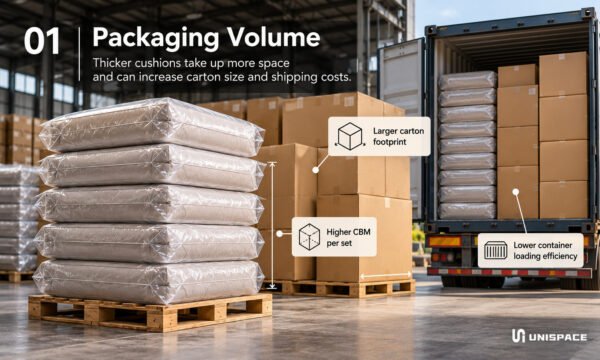
Figure 01. Packaging volume and container-loading efficiency.
Why Cushion Thickness Affects Container Loading
Thicker cushions occupy additional space, especially when they cannot be efficiently nested inside the furniture frame.
This becomes particularly important for fully welded sofas, large sectional seating systems, and products with multiple oversized back cushions.
Even when the metal frame is designed for knock-down (KD) packaging, bulky upholstery components may limit the potential space savings.
Compare Shipping Volume, Not Just Unit Price
Manufacturers may propose several packaging approaches:
- Flat-packed cushions inside furniture cartons
- Cushions nested within available frame space
- Separately packaged upholstery components
- Vacuum-compressed cushions, where suitable
Buyers should request complete packing specifications, including carton dimensions, cubic meters (CBM) per set, estimated container loading quantities, and validation of compressed packaging where applicable.
BUYER’S TAKEAWAY
Compare the landed cost per furniture set, not only the quoted ex-factory unit price.
Compare the landed cost per furniture set, not only the quoted ex-factory unit price.
02Foam Compression and Recovery
Vacuum compression is sometimes used to reduce the shipping volume of outdoor furniture cushions.
While this approach can improve packaging efficiency, not every cushion construction is suitable for prolonged compression.

Figure 02. Illustrative compression and recovery process. Values shown in the illustration are examples, not verified production test results.
What Happens During Compression?
Compression temporarily reduces the dimensions of foam and fiber-filled cushion components.
After unpacking, the materials should expand toward their intended dimensions. However, recovery depends on foam formulation, internal construction, compression severity, storage conditions, and compression duration.
Potential problems include:
- Uneven cushion thickness
- Rounded or distorted corners
- Wrinkled fabric covers
- Reduced loft in fiber-filled sections
- Permanent deformation or incomplete recovery
Foam Density Is Not Enough
ASTM D3574 provides methods for evaluating flexible polyurethane foam properties, including density, firmness, resilience, and compression set.
Density describes mass per unit volume, while indentation force deflection (IFD) measures firmness. Compression set evaluates residual deformation following a specified compression procedure.
What Should Buyers Test?
- Use the actual finished cushion construction.
- Apply the proposed compression and packing method.
- Simulate a representative storage period.
- Measure dimensions before compression and after unpacking.
- Document appearance and recovery at agreed inspection intervals.
Checkpoints at 24, 48, and 72 hours can help document recovery, but final acceptance criteria should be based on the specific material and validated packaging method.
BUYER’S TAKEAWAY
Never assume a cushion that compresses successfully will recover perfectly after international transportation.
Never assume a cushion that compresses successfully will recover perfectly after international transportation.
03Water Retention and Drying Performance
Outdoor furniture cushions must perform in environments where rain, humidity, condensation, and occasional splashing are common.
For thicker cushions, moisture management throughout the entire upholstery construction becomes particularly important.
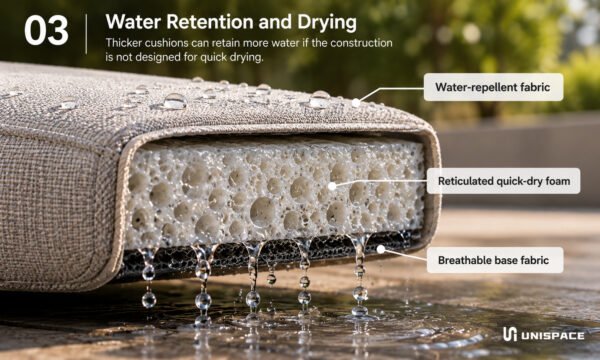
Figure 03. Example of a layered outdoor cushion drainage construction.
Water-Resistant Fabric Is Not the Same as a Waterproof Cushion
Many outdoor upholstery fabrics are designed to repel water, but not all are completely waterproof.
Even when the fabric surface resists moisture, water can enter through seams, zippers, and other construction details.
If moisture reaches an absorbent cushion core, prolonged dampness can contribute to odor, staining, and microbial growth under unfavorable conditions.
Conventional Foam vs. Quick-Dry Foam
| Feature | Conventional PU Foam | Reticulated Quick-Dry Foam |
|---|---|---|
| Cell structure | Varies by formulation | Interconnected open pores |
| Water drainage | Depends on construction | Designed to promote drainage |
| Air circulation | Varies | Generally greater airflow |
| Typical use | Protected or engineered seating | More exposed outdoor seating |
Drainage Must Be Designed Into the Entire Cushion
- Fabric permeability and water-repellent treatment
- Protective liners where appropriate
- Drainage openings or breathable underside materials
- Stitching and zipper placement
- Airflow around and beneath the cushion
- Accessibility for removal and drying
BUYER’S TAKEAWAY
Request the complete cushion construction and intended outdoor exposure conditions, not simply a claim of “waterproof fabric.”
Request the complete cushion construction and intended outdoor exposure conditions, not simply a claim of “waterproof fabric.”
04Fabric Color Variation
Color consistency plays an important role in the perceived quality of premium outdoor furniture.
Large cushions create broad, highly visible fabric surfaces. Even modest differences in shade may become noticeable when several sofa modules are displayed together.
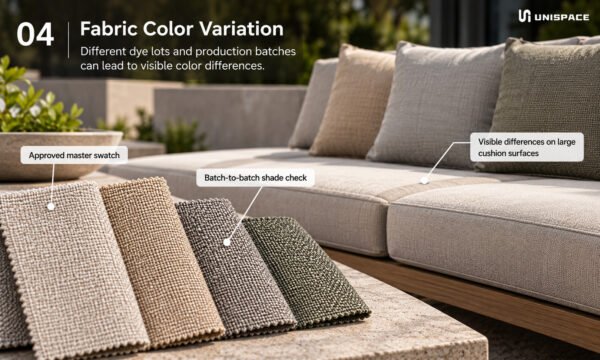
Figure 04. Fabric color references and production shade consistency.
Why Do Cushion Colors Vary?
Fabric color variation can result from differences in dye lots, fibers, finishing processes, and production batches.
These issues become more significant when outdoor collections involve multiple seating modules, separate production orders, different cushion suppliers, or replacement components manufactured later.
Colorfastness and Batch Consistency Are Different
Colorfastness describes resistance to color change under specified conditions, such as exposure to light. Batch consistency concerns differences between production lots.
Relevant testing methods include ISO 105-B02 and AATCC TM16.3 for lightfastness assessment. However, these tests do not automatically guarantee a match between dye lots.
Practical Quality Control
- Approve a master fabric swatch.
- Record fabric supplier and color references.
- Identify dye lots during production.
- Compare fabric shades before cutting.
- Inspect finished cushions under agreed lighting conditions.
BUYER’S TAKEAWAY
A sample-approved color requires a repeatable quality-control process across production orders.
A sample-approved color requires a repeatable quality-control process across production orders.
05Replacement and After-Sales Support
For furniture importers and retail brands, replacement outdoor sofa cushions can become a significant after-sales consideration.
Customers may eventually require replacement seat cushions, back cushions, or fabric covers because of wear, accidental damage, or changes in appearance.
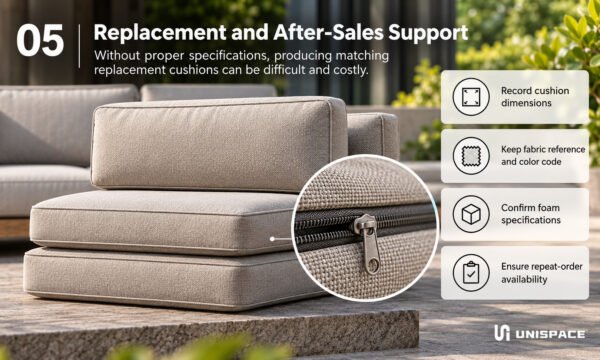
Figure 05. Replacement cushion specifications and after-sales support.
Why Are Replacement Cushions Complicated?
Two cushions with similar external dimensions may perform differently because of variations in:
- Foam density and firmness
- Core profile and edge construction
- Fiber wrapping thickness
- Fabric pattern and color
- Seam allowances and zipper positions
- Cushion attachment methods
Design for Long-Term Reproducibility
Importers should request a documented cushion specification as part of the product’s bill of materials (BOM).
The specification should include material references, dimensions, construction details, fabric information, and approved tolerances.
Buyers should also confirm whether replacement covers and complete cushions can be ordered separately, together with their minimum quantities and lead times.
BUYER’S TAKEAWAY
Replacement planning should begin during product development, not after the first customer complaint.
Replacement planning should begin during product development, not after the first customer complaint.
06What Cushion Specifications Should Buyers Request?
A professional outdoor furniture quotation should identify cushion construction clearly enough to support production approval, quality inspection, and future repeat orders.
| Specification | What Buyers Should Confirm |
|---|---|
| Finished Thickness | Nominal thickness and permitted tolerance |
| Foam Material | PU foam, reticulated foam, or composite construction |
| Foam Density | Measured density in kg/m³ |
| Firmness | IFD/ILD value and applicable test conditions |
| Recovery Performance | Compression-set data and packaging recovery tests |
| Cushion Wrapping | Fiber type, weight, and construction |
| Fabric Composition | Fiber type, coating, and finish |
| Lightfastness | Test method, result, and agreed requirement |
| Moisture Management | Water resistance, drainage, and drying construction |
| Cover Construction | Removable or fixed, zipper, seams, and lining |
| Fabric Color | Master swatch, color code, and dye-lot control |
| Packaging | Carton dimensions, CBM, and compression method |
| Replacement Support | Material records, MOQ, availability, and lead time |
Specifications should reflect the target market, price positioning, and intended use. A covered residential patio and an exposed hotel poolside area may require different cushion constructions.
BUYER’S TAKEAWAY
The most effective specification is not necessarily the most expensive one. It is the one that matches the product’s operating conditions.
The most effective specification is not necessarily the most expensive one. It is the one that matches the product’s operating conditions.
07Pre-Shipment Quality Control Checklist
Before approving a bulk shipment, procurement teams should verify that production cushions remain consistent with the approved sample.
A. Appearance and Dimensions
- Finished dimensions conform to approved tolerances.
- Cushion corners and edges retain the required profile.
- Fabric tension and seam alignment are consistent.
- Seat and back cushions fit the furniture frames correctly.
B. Material and Comfort
- Foam construction matches the approved specification.
- Material documentation is available where required.
- Firmness and seating support match the approved sample.
- No abnormal permanent deformation is visible.
C. Fabric and Moisture Performance
- Fabric color matches the approved standard.
- Dye lots and fabric references are recorded.
- Drainage features match the agreed construction.
- Zippers, seams, and removable covers function correctly.
D. Packaging and Recovery
- Carton dimensions match the packing plan.
- Compression follows the validated method.
- Recovery-test records are available where specified.
- Packaging protects against contamination and deformation.
Inspection requirements and sampling levels should be agreed before production rather than established only when the shipment is ready.
08Final Thoughts: Design Beyond Appearance
Thick outdoor sofa cushions can strengthen a furniture collection’s visual identity, especially when combined with clean metal frames, generous seat proportions, and carefully selected outdoor fabrics.
However, their commercial success depends on more than the appearance of the showroom sample.
Packaging efficiency affects landed costs. Foam construction influences long-term comfort and recovery. Moisture management determines outdoor performance. Fabric control supports consistent presentation, while replacement planning protects the collection after delivery.
A premium-looking cushion should also be practical to manufacture, economical to ship, reliable to use, and straightforward to replace.
When discussing an OEM/ODM outdoor sofa project with a manufacturer, ask for the complete cushion specification—not just the finished thickness.
Frequently Asked Questions
Are thicker outdoor sofa cushions always more comfortable?
No. Comfort depends on foam firmness, density, construction, seat geometry, and supporting structure. A well-engineered thinner cushion can provide better support than a poorly designed thicker one.
What is the best foam for outdoor sofa cushions?
There is no universal best foam. Conventional polyurethane foam may be appropriate for protected or suitably engineered seating systems, while reticulated quick-dry foam is often preferred when rapid drainage is important.
Can outdoor cushions be vacuum packed for shipping?
Some can, provided their construction is suitable and recovery has been validated. Buyers should request packaging and recovery trials before approving compressed packaging for bulk production.
Are water-resistant outdoor cushions waterproof?
Not necessarily. Water resistance and waterproofing describe different performance properties. The complete cushion assembly determines how moisture is managed.
How can buyers avoid color differences in outdoor cushions?
Use approved master swatches, establish color tolerances where appropriate, track fabric dye lots, and inspect production against the approved standard. Future replacements may still differ from weathered original cushions.
What should importers confirm before ordering replacement cushions?
Confirm dimensions, foam specifications, fabric references, color, construction details, availability, minimum order quantities, and lead times.
About UNISPACE
UNISPACE manufactures outdoor metal-frame furniture and supports OEM/ODM development, including structural engineering, material selection, sample review, production consistency, and packaging optimization for international furniture buyers.
Technical illustrations are provided for educational purposes and do not represent measurements from specific UNISPACE production tests.