


What Actually Determines the Rust Resistance of a Metal Outdoor Chair?

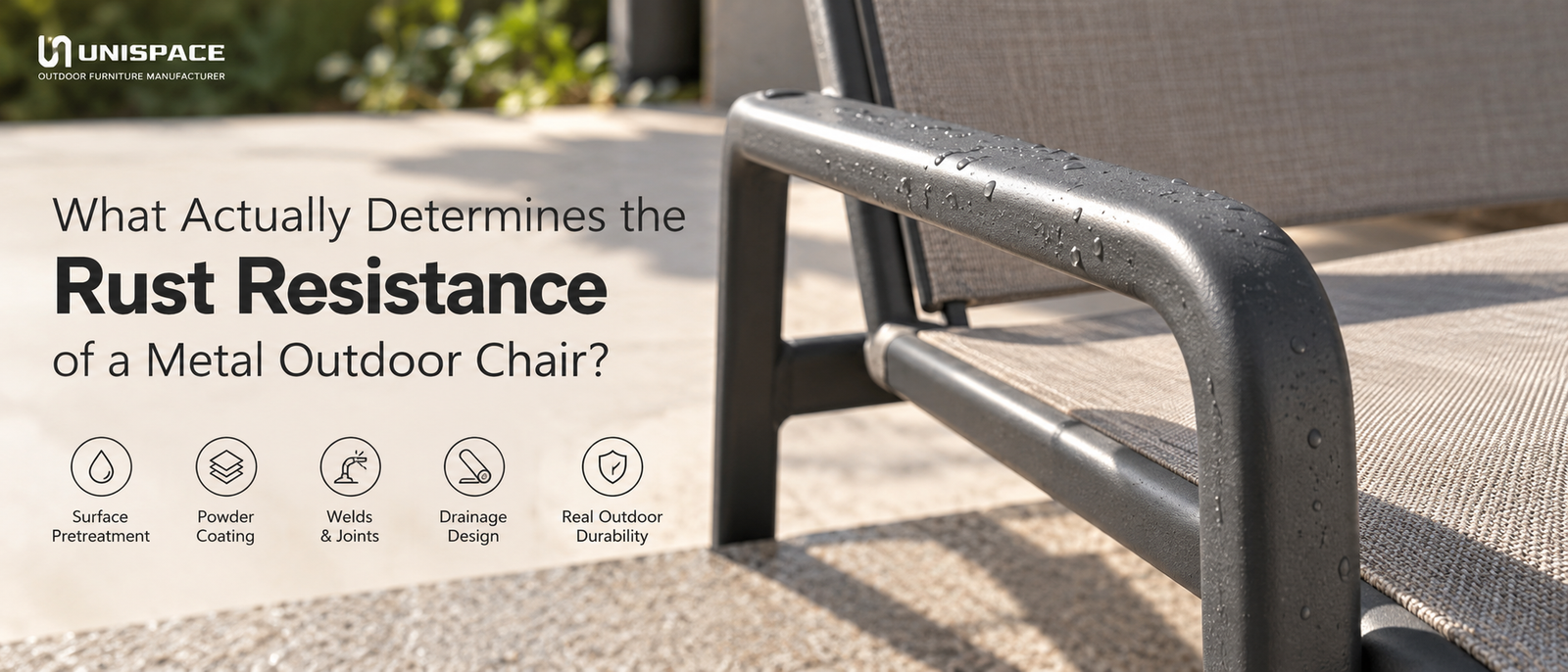
Manufacturer insight: The rust resistance of a metal outdoor chair depends on its complete protection system—not simply its visible powder-coated finish. This guide examines the manufacturing details buyers should confirm before mass production.
A smooth powder-coated surface does not reveal the entire protection system.
Two metal outdoor chairs can look nearly identical when they leave the factory. Yet their corrosion resistance may be very different. Long-term performance depends on how a frame is designed, fabricated, prepared, coated, and inspected.
For importers, retailers, and outdoor furniture brands, coating color or a high salt-spray hour figure is not enough. This guide explains the five manufacturing factors that deserve closer attention before mass production.
Why Rust Resistance Starts Before Powder Coating
Powder coating is often treated as the single answer to rust prevention in outdoor furniture sourcing. In practice, a protective finish performs as intended only when the substrate, frame design, surface preparation, and application process work together.
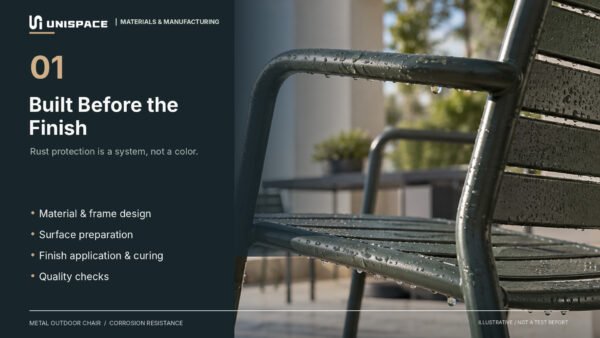
Corrosion resistance begins with a complete protection system.
Carbon steel may corrode when moisture and oxygen reach exposed metal. Aluminum does not develop iron rust, but it can still suffer other forms of corrosion, especially in aggressive environments. A sheltered residential patio and a coastal restaurant therefore need different risk assessments.
Humidity, chloride exposure, cleaning chemicals, and repeated wet–dry cycles can affect long-term performance. The intended environment should be defined before the frame material and coating specification are approved.
The coating system should match the chair’s service environment—not merely its catalog appearance.
Surface Pretreatment: The Foundation of Protection
Surface pretreatment is one of the most important but least visible factors behind the corrosion resistance of a metal outdoor chair. Before powder coating, oils, grease, oxides, welding residue, and other contaminants must be managed.
A Suitable Pretreatment Route
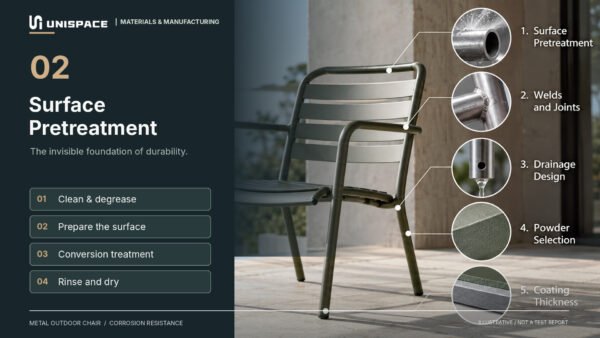
Pretreatment helps prepare the frame surface before coating.
- Cleaning and degreasing — remove manufacturing oils and other contamination.
- Surface preparation — remove loose rust, oxides, and unsuitable residues.
- Conversion treatment — create a suitable surface to support adhesion and corrosion performance.
- Rinsing and drying — eliminate residual chemicals and moisture before coating.
Phosphating is one established option for steel, but it is not the only possible route. The correct sequence depends on the substrate, coating chemistry, and required performance. Process consistency—solution control, rinsing, and drying—is just as important as the process name.
Welds, Joints, and Edges: Where Corrosion Can Begin
A metal chair is a structural assembly of bent tubes, welds, joints, openings, and contact points. These details can create localized corrosion risks even when large visible surfaces look properly coated.
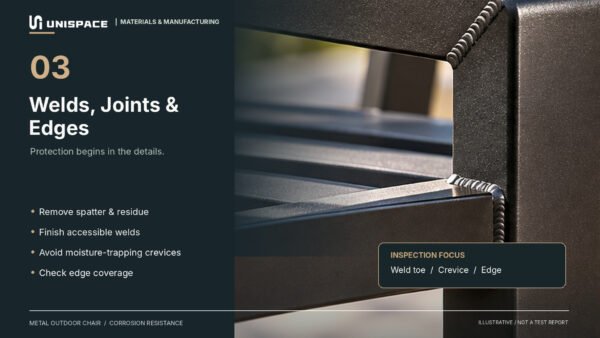
Welds, joints and edges require particular attention.
Welding heat, spatter, residues, inadequately finished joints, and narrow crevices may complicate cleaning and coating coverage. Inspect leg-to-seat connections, armrest joints, tube openings, sharp edges, and areas where multiple parts meet.
A simpler frame can reduce unnecessary intersections, but fewer welds do not automatically guarantee better performance. Good design must satisfy structural strength while remaining suitable for cleaning, coating, and inspection.
Drainage Design: Managing Moisture
Water can enter hollow steel tubes through openings, condensation, rain, or cleaning. If it cannot escape, corrosion may progress inside the frame while its exterior still appears acceptable.
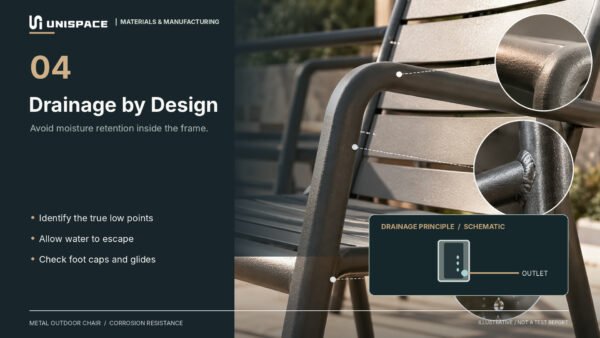
Drainage design manages moisture inside tubular structures.
Risk areas include lower leg sections, horizontal tubes, incorrectly positioned openings, and certain foot-cap assemblies. The answer is not simply to drill more holes. A drainage solution must account for the chair’s normal orientation and true low points.
Where appropriate, an engineered sealed construction can also be considered. Caps and glides must not become moisture traps. Poolside and coastal projects deserve extra attention because saline exposure and persistent dampness can increase risk.
Powder Selection: Suitable Coatings for Outdoors
“Powder-coated” describes a finishing method, not a guaranteed exterior performance class. Buyers need to know what powder is being applied and whether the formulation is suitable for the intended outdoor environment.
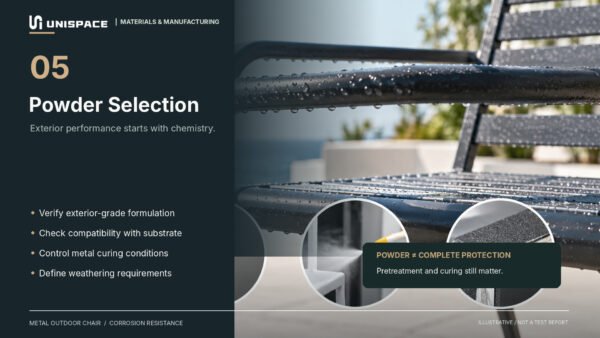
Exterior-grade powder selection should match the service environment.
Suitable polyester powder coatings are widely used for outdoor furniture because they can offer good UV and weathering performance. Many conventional epoxy powders are better suited to interiors and can chalk or lose appearance under sunlight. A more demanding environment may justify a compatible primer or multilayer system.
Specifications Worth Checking
- Powder chemistry, supplier, and exact product reference.
- Exterior weathering data and the recommended pretreatment.
- Recommended application, curing, color, and gloss characteristics.
Curing is part of performance. The metal component must reach the temperature and holding time required by the powder manufacturer. A smooth appearance alone cannot confirm adequate curing.
Coating Thickness: Why More Is Not Always Better
Film thickness matters, but the thickest possible layer is not the objective. The suitable range depends on powder type, substrate, part geometry, and supplier recommendations.
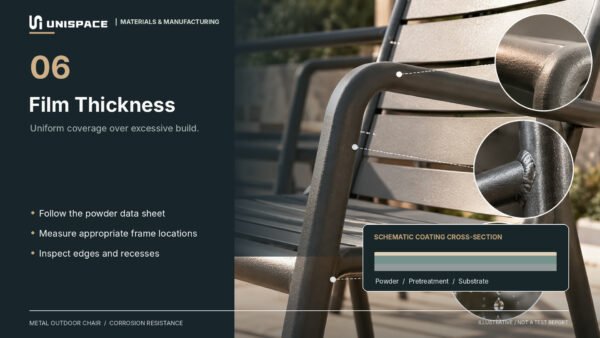
Film thickness must be considered together with edge coverage.
Insufficient film thickness can leave vulnerable areas poorly protected. Excessive deposition can also introduce application defects or reduce mechanical performance, depending on the system. Meanwhile, sharp corners and recessed joints may receive less powder than flat surfaces.
A single average measurement does not demonstrate uniform protection. Suppliers should agree on a measurement method, representative locations, sampling plan, and acceptance criteria before production.
Correct, consistent coverage is more valuable than an impressive thickness number alone.
Evaluating Corrosion Resistance Before Ordering
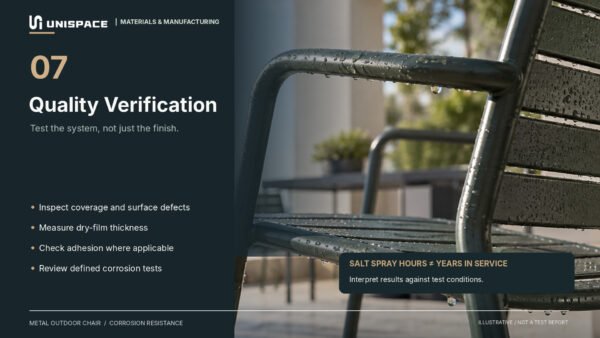
Testing and inspection complement agreed specifications.
A showroom sample or attractive product photograph cannot prove corrosion resistance. Buyers should combine visual inspection with relevant production records and agreed test results.
Appearance checks can identify exposed areas, scratches, coating damage, and obvious finishing defects. Depending on the project, coating thickness checks, adhesion tests, and production process controls may provide further evidence.
Interpreting Salt-Spray Claims
ISO 9227 describes standardized salt-spray test methods. Such tests can support comparisons under defined laboratory conditions, but a result of “500 hours” or “1,000 hours” cannot be directly converted into years of outdoor service.
A meaningful report identifies the metal substrate, pretreatment, coating system, specimen preparation, test method, exposure duration, and failure criteria. Testing should support—not replace—an agreed product specification.
Specifications Buyers Should Request
The most practical sourcing question is not simply whether a metal outdoor chair is “rust-proof,” but what has been specified, controlled, measured, and agreed.
| Checkpoint | What to confirm |
|---|---|
| Base material | Steel or aluminum type; relevant grade and specifications |
| Pretreatment | Cleaning, conversion treatment and process controls |
| Weld finishing | Spatter removal and joint preparation |
| Drainage | Tube openings, low points and foot-cap design |
| Powder | Product reference, exterior performance and curing data |
| Film thickness | Target range, method, locations and sample plan |
| Testing | Applicable standards, sample status and failure criteria |
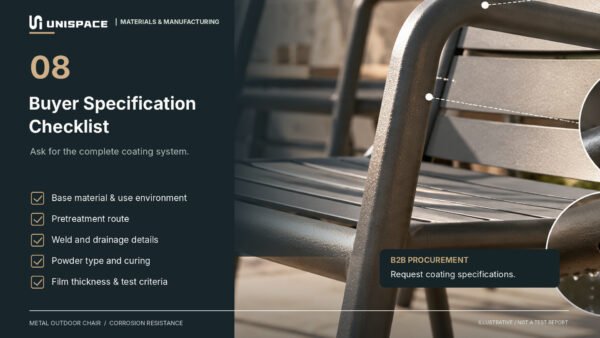
A documented specification checklist supports B2B sourcing decisions.
Not every application needs the same level of documentation. A sheltered residential chair and a coastal commercial installation may require different protection systems. What matters is agreeing on performance and acceptance criteria before mass production.
Frequently Asked Questions
Can a powder-coated metal outdoor chair still rust?
Yes. Carbon steel can corrode if the protective coating is damaged, poorly applied, or unable to protect vulnerable structural details.
Is thicker powder coating always better?
No. Adequate preparation, the right coating system, proper curing, and uniform coverage matter alongside specified thickness.
Are aluminum outdoor chairs completely corrosion-free?
No. Aluminum does not form iron rust, but localized corrosion—including pitting—can still occur under some conditions.
What is the single most important anti-rust process?
There is no universal single step. Pretreatment, weld preparation, drainage, coating selection, curing, film thickness, and inspection must function together.
Final Takeaway
Rust resistance is designed and manufactured—not simply applied.
The corrosion resistance of a metal outdoor chair cannot be judged by appearance, color, or film thickness alone. It results from substrate choice, frame design, pretreatment, weld finishing, drainage, suitable powder selection, curing control, and documented inspection.
For importers and outdoor furniture brands, these details influence returns, warranty risk, consistency, and long-term customer satisfaction. At UNISPACE, we approach metal-framed outdoor furniture as a complete engineering and manufacturing system.
Request coating specifications.
Discuss frame design, pretreatment, powder coating, and the protection requirements of your target environment with UNISPACE.