


What a Poolside Lounger Must Handle Beyond Rain

Pool lounge chairs work in a more demanding environment than ordinary patio furniture. A poolside chaise may face chlorinated splash water, repeated wet and dry cycles, strong sun, sunscreen residue, cleaning chemicals, and frequent movement. For hotels and resorts, an “outdoor” label alone is too broad to serve as a specification.
The useful question is whether the complete product system fits its actual location: frame, pretreatment, coating, hardware, drainage, sling, floor contacts, and maintenance.
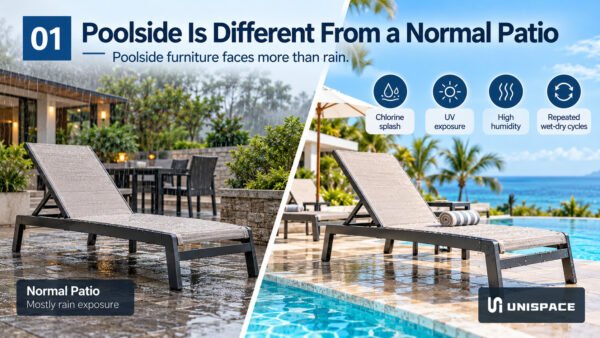
01 | Why Poolside Is Different From a Normal Patio
On a residential patio, a chair may get wet occasionally and remain dry for days. Around a pool, wet towels and swimmers keep introducing water even in fine weather. Staff may also wash the deck daily. Once water evaporates, residues can remain around feet, joints and adjustment parts.
Map exposure before choosing a specification. Ask whether the chairs sit beside an outdoor chlorinated pool, an indoor pool, a saltwater system or a coastal deck. Record how often the deck is washed, whether chemical splashes reach the furniture and where chairs are stored between seasons. These answers establish a more useful brief than a generic request for weatherproof patio furniture.
Indoor pools bring another condition: sustained humidity and a chemically demanding atmosphere. Identify the pool type, location and cleaning routine before approving the frame finish or sample.
02 | Chlorine Moisture and Corrosion Risk
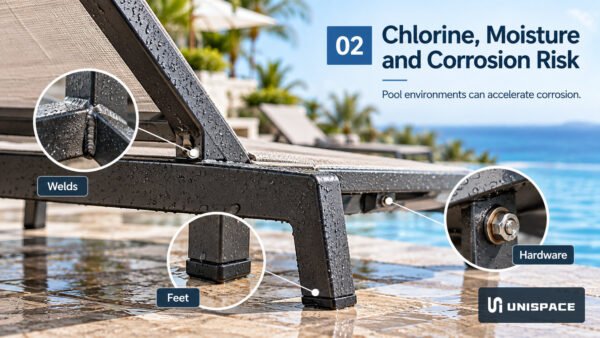
For powder coated steel pool lounge chairs, corrosion resistance depends on a chain of decisions: cleaning and pretreatment, welding, edge and weld coverage, outdoor coating selection, curing, drainage and protection during transport. “Powder coated” identifies a process; it does not by itself define performance in a particular pool setting.
A finish should also be reviewed at the geometry that is hardest to coat: tube ends, welded intersections, bolt holes and the underside of a frame. Buyers can ask the supplier to show how these areas are prepared and protected on the approved sample. The discussion is about a repeatable process and an appropriate coating system for the stated environment, not a blanket promise that steel cannot rust.
Pay particular attention to feet and hardware. Deck water can surround a chair leg long after the seat looks dry. Adjustable backs add pivots, bolts and contact points, which need accessible cleaning and sensible material selection. For a heavily chlorinated indoor pool or a coastal site, ask the supplier to review the exposure separately.
03 | UV Exposure Is a Materials Test
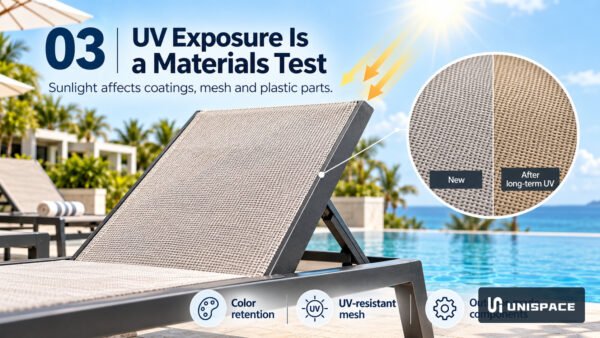
Pool decks are often designed for long hours of sunlight. UV exposure affects coating color and gloss, sling fabric, sewing thread, plastic glides and wheels. On a hotel deck with many identical loungers, uneven fading becomes particularly visible.
Color approval deserves the same attention as structure. Place finish and fabric samples together under the intended light, then document the approved color, material reference and acceptable variation for production. If a project uses several batches over time, the sourcing team should ask how replacement sling panels and glides will be identified and matched.
Specify each exposed material for outdoor service and request relevant product data or test evidence when the project warrants it. A showroom sample cannot predict every season of use; compare actual material specifications and the maintenance conditions expected on site.
04 | Drainage Must Be Designed Into the Lounger
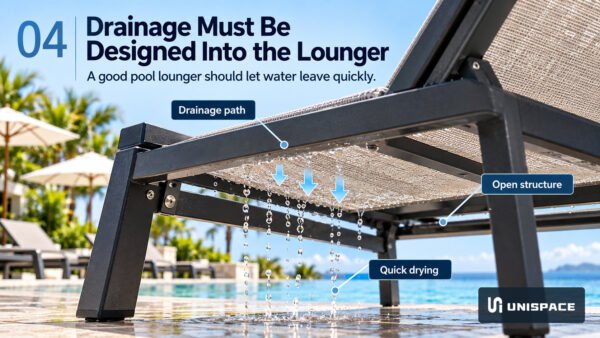
Water needs a clear way out. A tubular frame may admit water through an opening; if its lowest point in the finished, normally positioned chair has no exit, moisture can remain inside. Hidden traps may also occur near caps, recessed bolts, welded junctions and backrest mechanisms.
Inspect a physical sample in its normal reclined and upright positions. After wetting the seat and frame, look for water trapped at a low tube point or behind a fitting. A neat-looking hole that sits above the actual low point may offer little benefit. Any drainage opening must also be considered alongside coating coverage, appearance and the way the product is packed.
Drainage holes must be located according to the completed geometry, not placed at random during fabrication. An open seat structure and suitable sling can help the lounger return to service sooner after splashing, rain or cleaning.
05 | Why Sling Mesh Works Well Around Pools
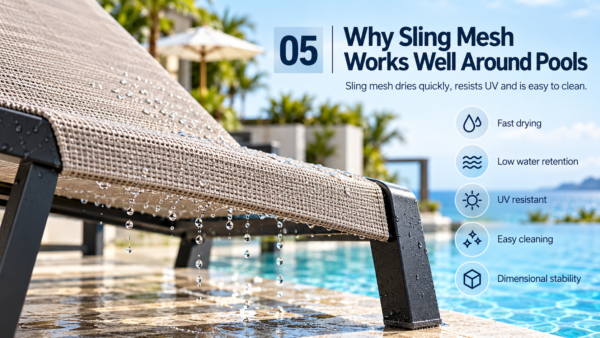
A properly specified outdoor sling allows water to pass through the seat instead of remaining in a thick cushion. For pool applications, buyers should examine water retention, drying, UV and color performance, tensile strength, dimensional stability, cleaning and replacement.
For a commercial order, document fabric construction, color, cut pattern, edge treatment and installation tension as part of the approved sample. These details affect comfort and consistency as much as the frame drawing. A replacement panel is only useful when the original specification can be identified and reproduced months later.
The sling and frame must be evaluated together. Excessive stretch may cause sagging; a poorly cut panel or inappropriate tension can concentrate stress at seams and mounting rails. Ask how the approved sample’s fabric, stitching and tension will be repeated in bulk production.
06 | Wet Decks and Commercial Operation
A pool chaise lounge contacts wet tile, stone, concrete or composite decking. Feet and glides should keep the chair stable, protect the surface and be replaceable when worn. Check chair movement during sitting, standing and backrest adjustment; do not assume a small plastic foot solves every deck condition.
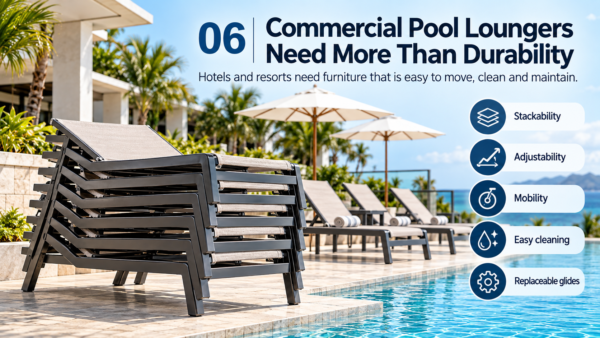
Commercial pool lounge chairs also need operational efficiency. Staff move, wipe down, stack and store them repeatedly. Stackability saves room only if contact points protect the coating; wheels help movement only if axles and replacement parts suit the use. Simpler, accessible adjustment and replaceable slings or glides can make maintenance more practical.
Evaluate the chair as staff will use it: move it across the deck, adjust the back, stack the permitted quantity and clean the points that collect residue. Check whether stacked frames touch finished surfaces and whether wheels, glides and sling panels can be serviced without replacing the whole lounger. These routine actions determine practical ownership cost.
07 | Buyer Checklist Before Sample Approval
Before ordering hotel pool lounge chairs or a private label collection, give the manufacturer the real site conditions. A visually approved sample should become a documented production specification, not just a photograph.
During sample approval, record the selected frame material, coating sequence, sling specification, hardware, feet, adjustment details and packing method in one signed specification. Confirm which differences would require a new approval. This reduces the chance that a visually similar production sample differs at a hidden connection or service component.
| CHECK | CONFIRM |
|---|---|
| Use and pool type | Residential or commercial; outdoor or indoor; chlorinated or saltwater |
| Exposure | Climate, sun hours, humidity, splash and cleaning frequency |
| Frame and coating | Tube, pretreatment, weld coverage, outdoor finish and curing |
| Water path | Low points in normal use, tube openings, seat and adjustment details |
| Sling and hardware | Fabric data, tension, fasteners, pivots, glides and wheels |
| Operations | Cleaning, stack protection, spare parts and storage |
| Sample approval | Approved physical swatches, drawings and test criteria where needed |
08 | A Better Question for Poolside Sourcing
What will this chair face every day? The answer can change the coating, sling, hardware, drainage design and even frame structure. An outdoor pool by the sea and a humid indoor pool should not be assumed to need the same specification.
For B2B buyers, evaluate the complete system rather than an isolated “waterproof” or “rustproof” claim. Define the actual poolside application before sample approval and request a specification that the factory can reproduce.
For related engineering considerations, read our guide to outdoor chair design and production.
Discuss Your Poolside Application
UNISPACE works with overseas buyers on metal frame outdoor furniture development, sampling and production. Share the pool type, location, expected volume, preferred sling, stacking needs and maintenance conditions so the frame, finish and practical details can be reviewed before production.
Learn more about our manufacturing capabilities and see our buyer FAQ for questions about finishes, sampling and customization.