Modern Outdoor Sofa Colors: 2026 Trends & Sourcing

UNISPACE / 2026 OUTDOOR FURNITURE INSIGHTS
Modern Outdoor Sofa Colors: Market Appeal vs. Production Efficiency
2026 Market Insights from the US, UK, Germany and Australia
A modern outdoor sofa needs more than an attractive color to succeed in international markets. For furniture importers, wholesalers and brands, color decisions influence product positioning, material sourcing, manufacturing consistency, minimum order quantities and long-term inventory costs.
Across the United States, United Kingdom, Germany and Australia, 2026 design signals suggest increasing interest in warm neutrals, natural-looking textures and comfortable outdoor seating.
But a fashionable color is not necessarily a commercially efficient choice. For B2B buyers, the real challenge is to create furniture collections that appeal to customers while remaining practical to manufacture, reorder and maintain.
01 | The Global Outdoor Furniture Market in 2026
Outdoor furniture is increasingly designed as an extension of indoor living. Consumers are creating comfortable spaces for relaxation, entertaining and everyday use, with upholstered lounge seating becoming an important component of outdoor design.
According to the 2026 U.S. Houzz Outdoor Trends Study, 83% of surveyed renovated outdoor spaces include a lounge or seating area. Among outdoor lounge areas, 71% feature sofas or lounge chairs.
These findings describe homeowners involved in outdoor renovation projects, rather than the entire US population.
Meanwhile, research from CSIL indicates that the European outdoor furniture market exceeded €3 billion in 2025. The report forecasts a slight decline in 2026, while identifying upholstered outdoor furniture as a comparatively faster-growing category.
This environment creates both opportunities and challenges for international buyers. A collection must be visually relevant, but its color and material specifications also need to support competitive pricing, stable production and repeat orders.
02 | 2026 Outdoor Sofa Trends by Market
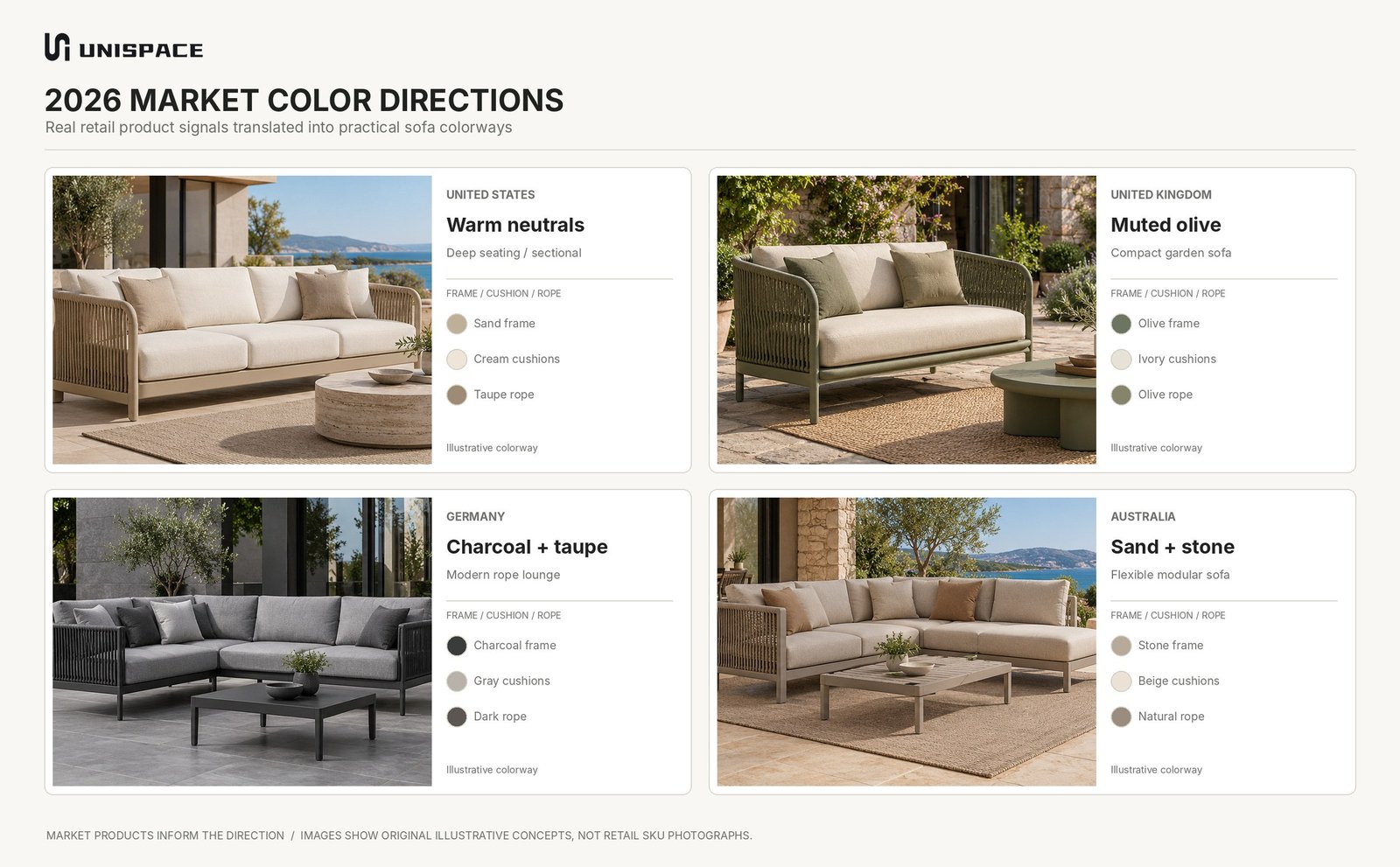
United States | Warm Neutrals and Comfortable Outdoor Living
The US market continues to show interest in outdoor conversation sets, modular seating and comfortable patio furniture. Warm, natural-looking color combinations offer possibilities for brands developing contemporary outdoor collections.
The 2026 Houzz Emerging Summer Trends Report identified year-over-year growth in searches for several earthy home-design colors.
| COLOR SEARCH TERM | YOY GROWTH |
|---|---|
| Rust colors | +178% |
| Chocolate brown | +153% |
| Mushroom color | +69% |
| Olive green | +57% |
| Sage | +55% |
| Taupe | +50% |
| Cream | +44% |
Note: These statistics measure home-design search interest, not outdoor sofa sales.
For outdoor furniture brands, the findings suggest opportunities to test sand, taupe, warm gray and muted olive as complementary options to traditional charcoal finishes.
Buyer Insight: Introduce selected new colors through controlled variations instead of replacing an established product range.
United Kingdom | Flexible Garden Furniture
The Argos Outdoor Living Report 2026, based on research involving 2,000 UK adults, highlights changing preferences for functional garden spaces.
The report found that 61% believe a well-designed garden makes their home feel larger, while 55% have created or plan to create distinct outdoor zones. Another 33% are more interested in an outdoor room than a traditional garden.
These findings suggest demand opportunities for coordinated garden furniture, compact conversation sets and flexible outdoor seating.
Stone, beige and taupe can provide versatile collection directions, although the research does not establish the UK’s best-selling outdoor sofa colors.
Buyer Insight: Combine adaptable configurations with neutral upholstery and weather-appropriate materials.
Germany | Restrained Design and Modular Collections
Germany is one of Europe’s largest outdoor furniture markets. In a more cautious European demand environment, inventory efficiency and coordinated product development are particularly important.
International outdoor furniture trade-fair coverage, including spoga+gafa, highlights modular seating, soft silhouettes, material textures and restrained contemporary design.
Anthracite, greige, warm gray and sand are relevant palette options for modern collections. These represent design directions rather than measured German sales rankings.
Buyer Insight: Shared frame finishes across sofas, lounge chairs and tables may improve collection consistency and production planning.
Australia | Natural Palettes and Durability
Australian outdoor living frequently connects patios, terraces, gardens and poolside spaces. This creates opportunities for comfortable furniture that coordinates with exterior materials.
Bunnings Trade Australia’s 2026 exterior design coverage identifies sand, greige, limestone and soft charcoal as notable directions in outdoor paving.
Although paving trends are not outdoor sofa sales figures, they provide useful design context.
A 2026 Luxo Living survey of 3,818 Australian furniture shoppers found that 32.16% ranked quality and durability as their leading purchasing factor, followed by comfort at 30.38%. This survey covers furniture generally, rather than outdoor sofas specifically.
For products intended for strong sunlight or exposed outdoor environments, coating performance, fabric colorfastness, material durability and maintenance requirements should remain important selection criteria.
Buyer Insight: Natural-looking colors should be paired with outdoor performance specifications suitable for the intended application.
04 | Four Practical Color Palettes for Modern Outdoor Sofas
Rather than offering numerous unrelated finishes, brands can develop a focused collection using compatible frame, cushion and woven-material colors.
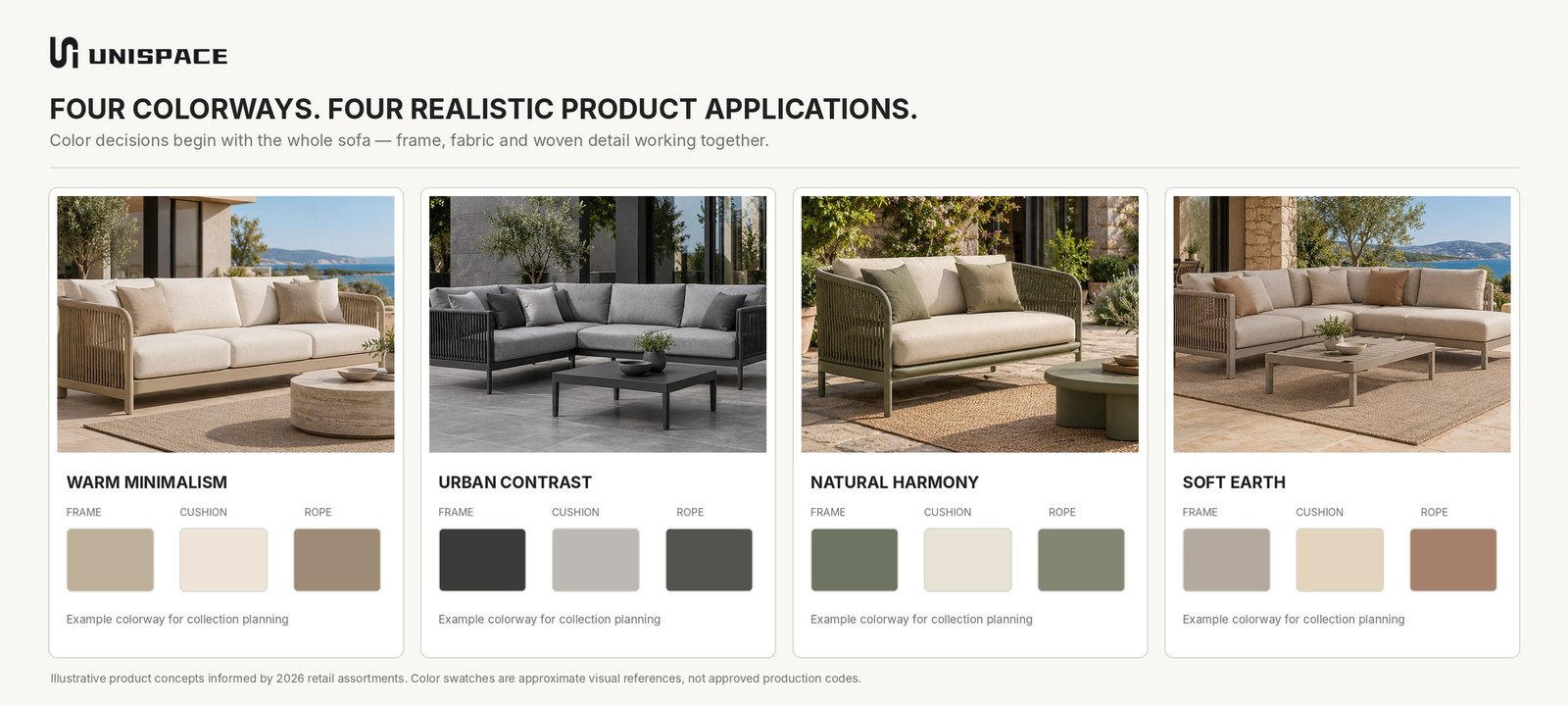
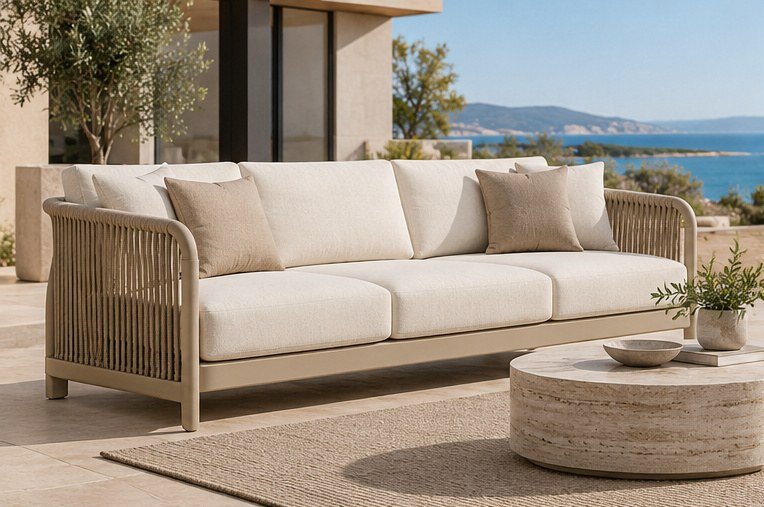
Sand frame / Warm white cushions / Taupe rope
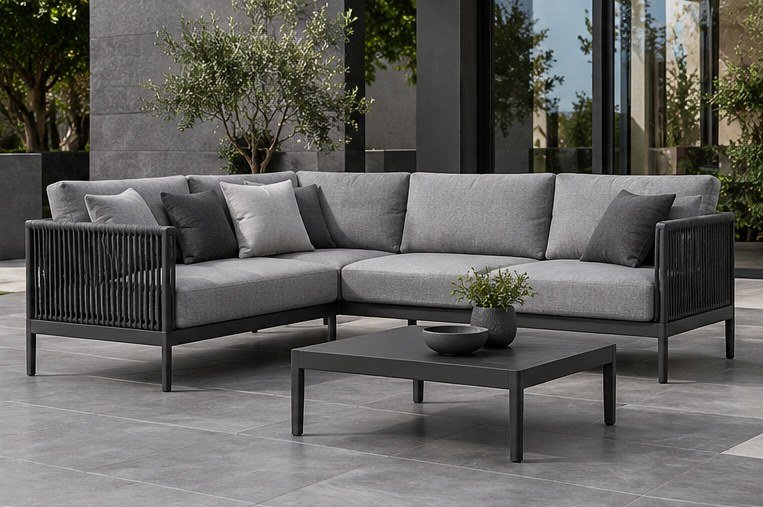
Charcoal frame / Light gray cushions / Graphite rope
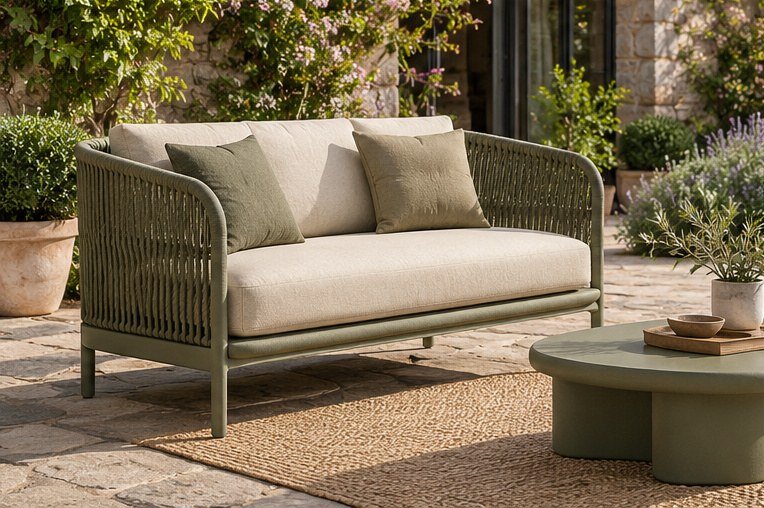
Muted olive frame / Beige cushions / Natural rope
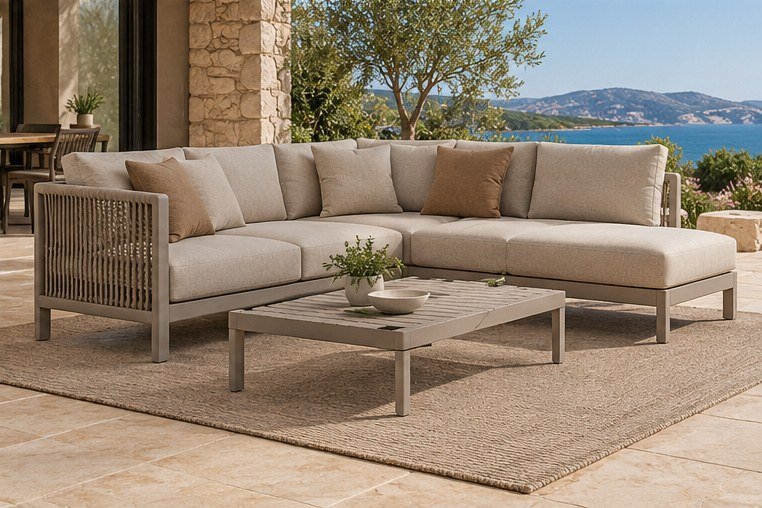
Warm gray frame / Oatmeal cushions / Clay-taupe rope
Illustrative product-development colorways, not country-specific sales rankings or approved production color codes.
Warm Minimalism
Sand metal frames, warm white upholstery and taupe woven details create a soft contemporary look. Using one standard sand frame finish across multiple models can help consolidate coating requirements.
Urban Contrast
Charcoal frames with light gray cushions offer a recognizable modern aesthetic. This palette can extend established outdoor furniture ranges without requiring a completely new material system.
Natural Harmony
Muted olive introduces a nature-inspired direction. Before adopting a custom olive coating, buyers should confirm powder availability, minimum production quantities and color consistency requirements.
Soft Earth
Warm gray frames, oatmeal cushions and taupe woven materials provide understated warmth and can be coordinated across related furniture models.
05 | Three Materials That Define Outdoor Sofa Color
A modern outdoor sofa often combines powder-coated metal, upholstered cushions and rope or PE rattan. Each material has different production processes and color-matching requirements.
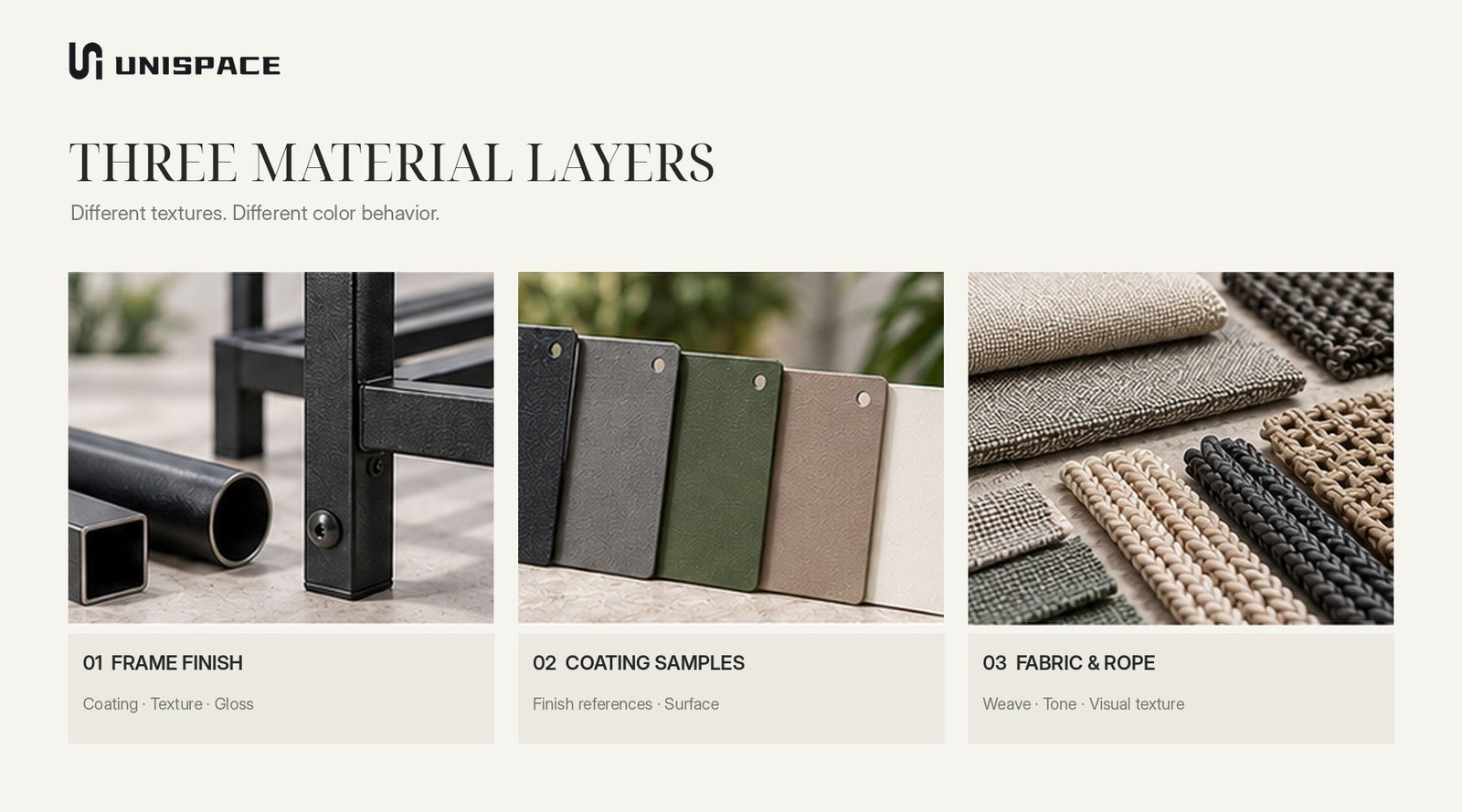
Metal Frames: Powder-Coated Finishes
Powder-coated aluminum and steel support various colors and surface textures. However, the final visual result depends on coating formulation, pretreatment, gloss, texture, application settings and curing conditions.
Buyers should approve physical coating panels rather than rely entirely on digital color references. The same named color can appear different across suppliers or finishing systems.
Cushions: Color and Fabric Performance
Cushion fabrics are an efficient way to introduce collection variations without changing the structural frame. A single charcoal sofa frame, for example, can be paired with beige, light gray or muted green upholstery.
However, different fabric colors can require separate dye lots, minimum material purchases and replenishment planning.
Outdoor upholstery selection should consider fabric composition, colorfastness, UV exposure, moisture management and replacement availability.
Rope and PE Rattan: Texture Changes Color Perception
Rope diameter, weave density, surface texture and lighting conditions influence how woven materials appear. A loose material sample may look different after weaving.
For better accuracy, buyers should evaluate physical woven panels and finished furniture samples before approving the final palette.
06 | Hidden Manufacturing Costs Behind Color Choices
Powder-Coating Changeovers
Multiple frame colors can require separate coating runs, cleaning, powder management and production scheduling. Standard finishes shared across several products are often easier to manage than many low-volume custom colors.
Fabric MOQ Is Not Finished-Product MOQ
A furniture manufacturer may accept a relatively small sofa order while a textile supplier requires a larger minimum purchase quantity for a custom fabric.
Finished-product MOQ and raw-material MOQ should therefore be evaluated separately. A low finished-product MOQ does not automatically mean every custom fabric color is economical.
Custom Rope and PE Rattan
Special weaving colors may create leftover material if they are used on only one low-volume model. Sharing compatible materials across multiple products can improve sourcing efficiency.
Replacement Components
Retailers may require matching cushions, woven panels or other components after the original shipment. Material discontinuation and visible color differences can create additional after-sales costs.
Every additional color should create enough commercial value to justify its sourcing, production and inventory complexity.
07 | Color Consistency: From Sample to Repeat Order
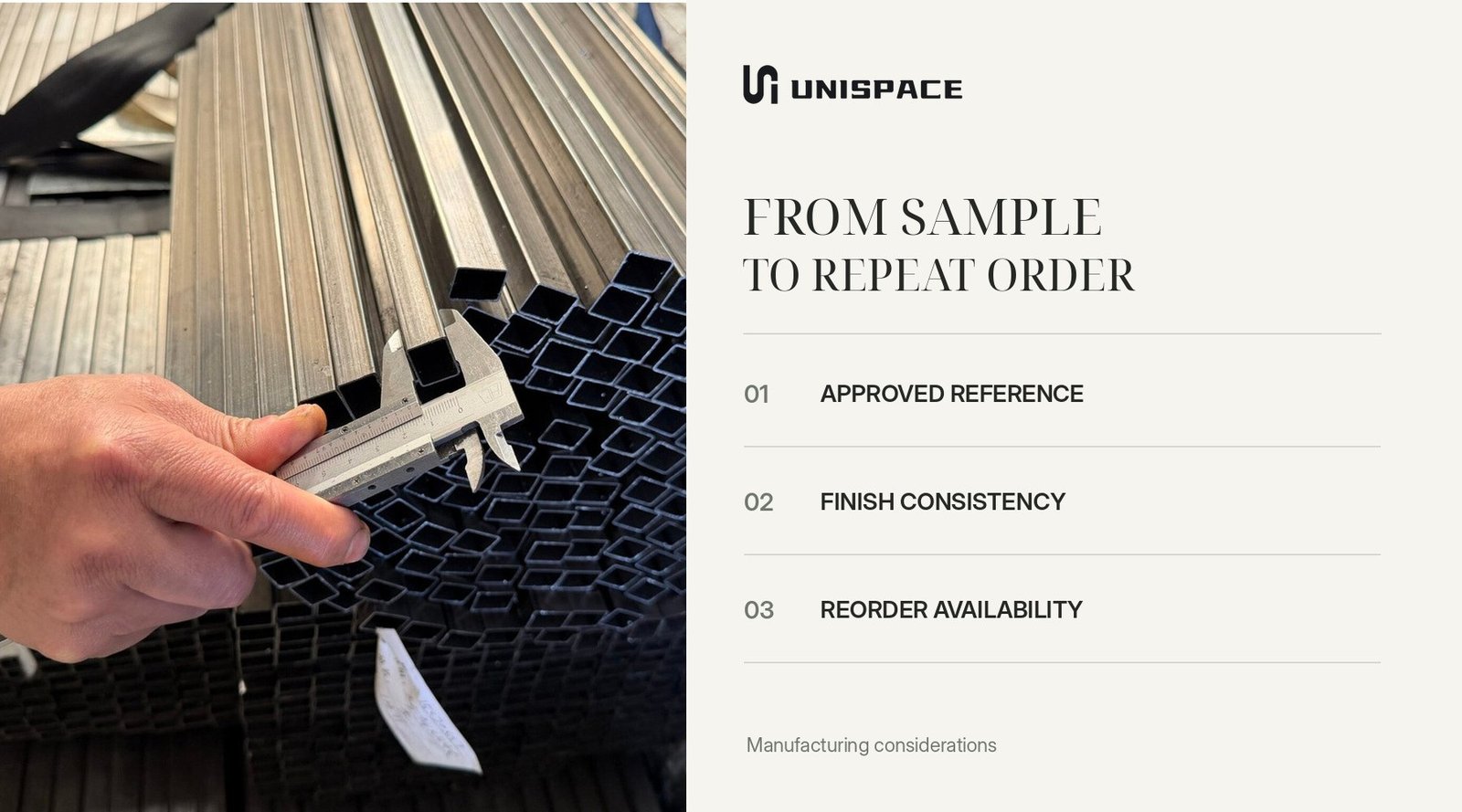
Color consistency is important when a furniture collection includes multiple sofa configurations, different production batches or long-term repeat orders.
Step 1 — Approve Physical References
Confirm coating panels, fabric swatches and woven samples before mass production. Photographs should not be the only final color standard.
Step 2 — Review the Complete Product
Evaluate the combined appearance of metal frames, cushions and woven materials under agreed lighting conditions.
Step 3 — Retain Master Samples
Keep approved physical references and document key material specifications, colors, textures and supplier details.
Step 4 — Define Acceptance Criteria
Where appropriate, buyers and manufacturers should agree on visual inspection methods or measurable color tolerances. The acceptance method should reflect the specific material and finish.
Step 5 — Plan for Repeat Orders
Confirm whether coating powders, upholstery fabrics and woven materials can be sourced again. Establish a process for reviewing supplier changes and material substitutions.
The objective is not simply to achieve a good-looking initial sample. It is to maintain an acceptable appearance throughout the commercial life of the product collection.
08 | MOQ and SKU Planning: Fewer Combinations, Better Control
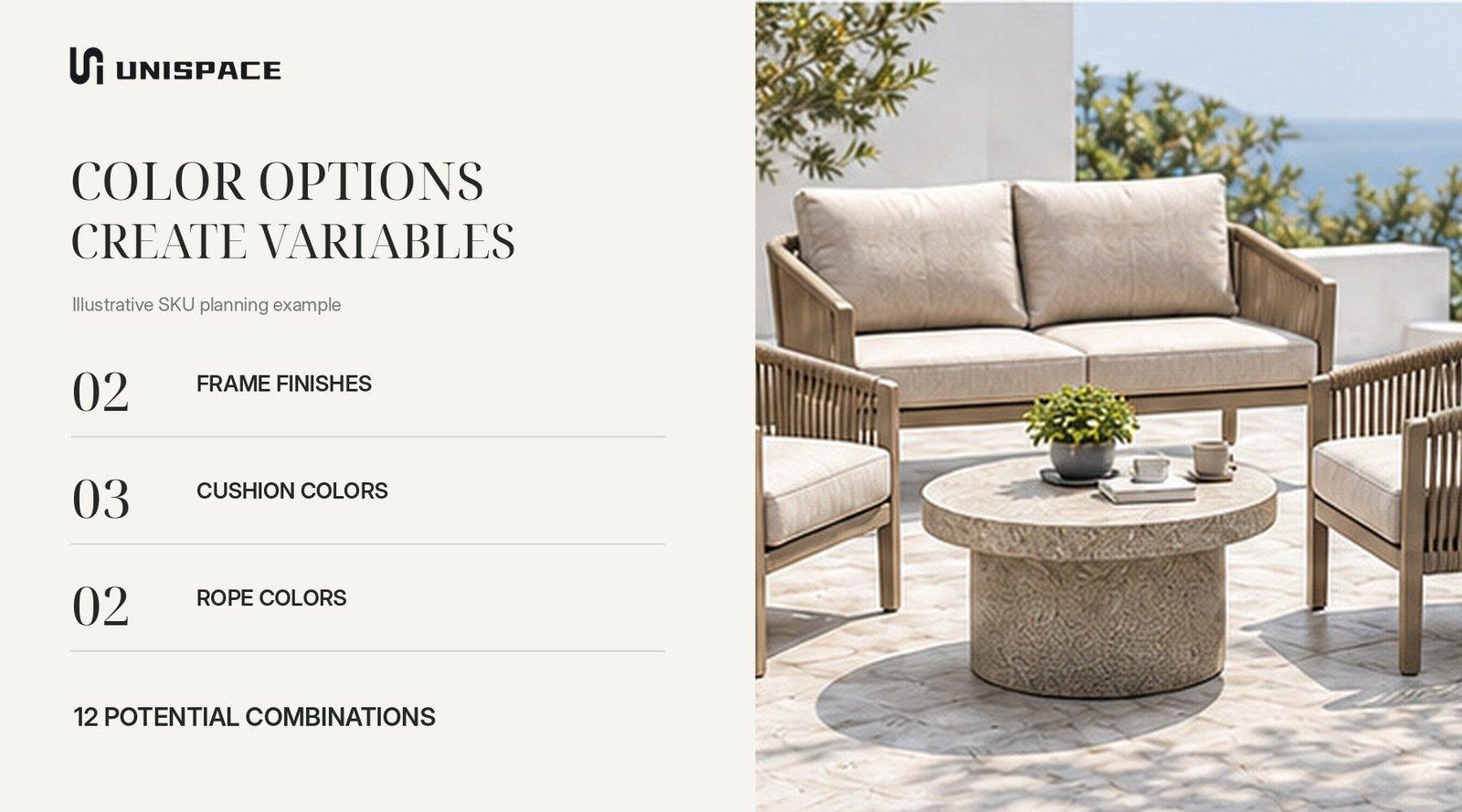
Consider a modern outdoor sofa available with two frame finishes, three cushion colors and two rope colors.
| COMPONENT | OPTIONS |
|---|---|
| Frame finishes | 2 |
| Cushion colors | 3 |
| Rope colors | 2 |
| Potential combinations | 12 |
Twelve potential combinations may appear attractive in a catalog, but they can create challenges for raw-material purchasing, production planning, inventory forecasting and replenishment.
Build a Core Palette
Choose one or two frame finishes that can be shared across compatible outdoor sofas, chairs and related products.
Introduce Controlled Variations
Use carefully selected cushion or rope options to differentiate the collection without unnecessarily increasing the number of structural and finishing specifications.
Confirm Material-Specific MOQ
Before offering custom colors, verify minimum purchase requirements for powder coating, fabrics, rope and PE rattan.
Consider Packaging and Container Efficiency
Different sofa configurations and cushion specifications can affect carton dimensions, packing arrangements and container utilization. Buyers should review these factors alongside product pricing and MOQ.
09 | A Practical Checklist for International Furniture Buyers
01. Market Positioning — Does the selected palette match the target market, retail channel and price segment?
02. Collection Coordination — Can the same finishes be shared across multiple furniture models?
03. Metal Frame Finishes — Have the coating colors, gloss levels and textures been approved?
04. Outdoor Fabrics — Are the selected cushions and fabrics suitable for the intended environment?
05. Woven Materials — Have the actual rope or PE rattan samples been evaluated?
06. Quality Control — Are physical references and acceptance criteria documented?
07. MOQ and Inventory — Have finished-product and raw-material minimum quantities been confirmed?
08. Repeat Orders — Can matching materials and replacement components be supplied in the future?
Answering these questions during product development helps reduce avoidable sourcing complications and supports more consistent purchasing decisions.
10 | Final Thoughts: Design for the Market, Plan for Production
The best modern outdoor sofa colors are not necessarily the newest or most fashionable.
They are colors that support a clear product identity, appeal to the intended customer and remain practical to manufacture consistently over time.
Design signals from the US, UK, Germany and Australia suggest opportunities for warm neutral palettes, natural-looking materials and coordinated outdoor furniture collections.
Yet commercial success also depends on coating availability, fabric sourcing, material consistency, minimum order quantities and future replenishment.
For importers, wholesalers and brands, a focused core palette combined with controlled variations can offer a practical balance between attractive product design and manageable manufacturing complexity.
More colors create more choices. The right colors create lasting value.
Frequently Asked Questions
What colors are trending for modern outdoor sofas in 2026?
Warm neutrals such as sand, taupe, cream and warm gray are useful design directions, alongside muted greens and earthy accents. These trends should be evaluated against actual customer demand rather than treated as proven global sales rankings.
Are outdoor sofa color preferences the same in every country?
No. Color preferences can differ by retail channel, target customer, climate, architecture, price positioning and intended application.
Which frame colors are suitable for modern outdoor sofas?
Charcoal, sand, warm gray and other restrained finishes can offer flexible foundations. The ideal selection depends on the overall collection and available manufacturing specifications.
Do custom outdoor sofa colors increase MOQ?
They can. Custom powder coatings, fabrics and woven materials may each have separate supplier minimum order requirements. These should be confirmed before finalizing custom color options.
How can buyers reduce color variation during mass production?
Approved physical references, documented material specifications, controlled production conditions and agreed inspection criteria can help manage color consistency.
Can one outdoor sofa design be adapted for several international markets?
Often yes. Shared structures combined with carefully selected frame, cushion and woven-material options can support different collections, provided each specification suits the intended market and application.