


Teak vs. Wicker vs. Metal Outdoor Sofas: Which Material Is Best?

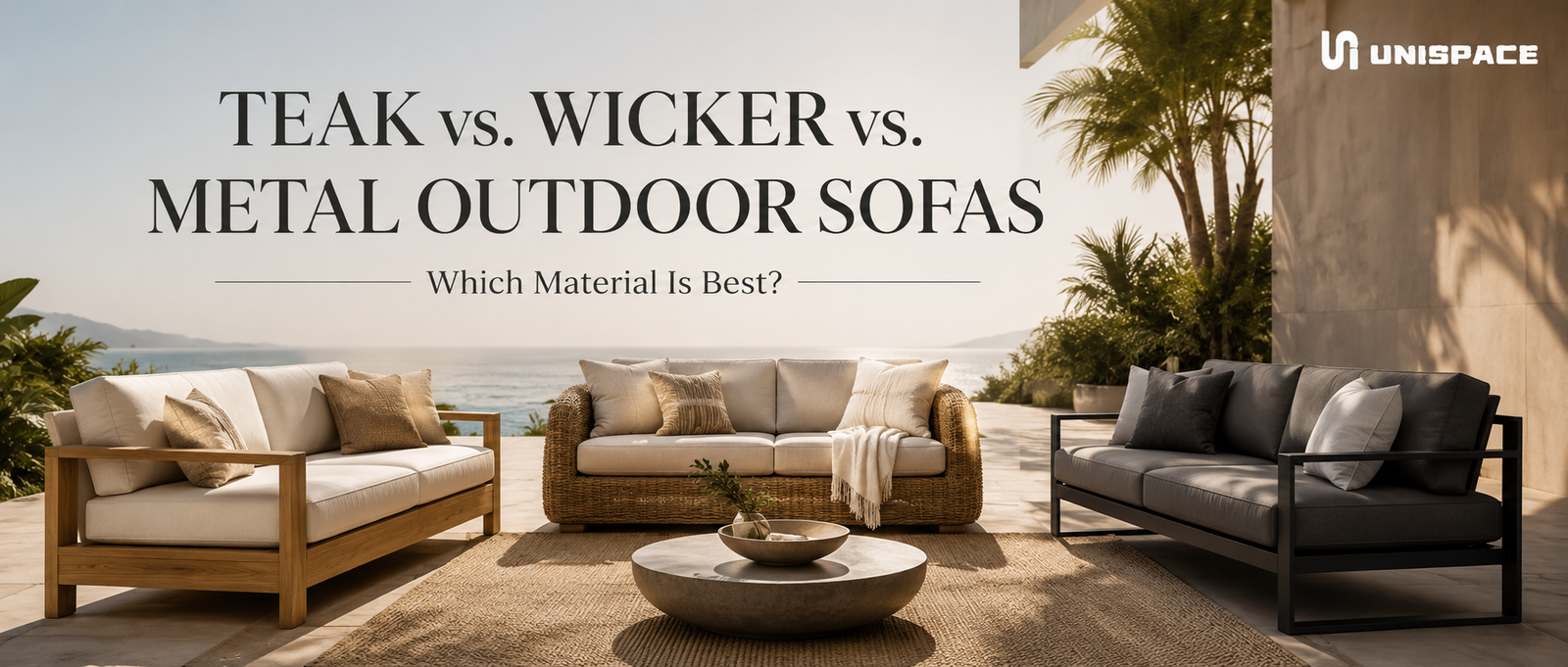
Teak vs. Wicker vs. Metal Outdoor Sofas: Which Material Is Best?
Choosing the right outdoor sofa material impacts comfort, durability, maintenance, and long-term cost. In this guide, we compare teak outdoor sofa, outdoor wicker sofa, outdoor sofa iron and metal-frame options, plus rope outdoor sofa designs, using practical manufacturing experience to help buyers select the best material system for real outdoor use.
Quick Contents
- How Outdoor Sofa Materials Affect Performance
- Teak Outdoor Sofas: Advantages and Limitations
- Wicker Outdoor Sofas: Natural vs. Synthetic Wicker
- Metal Outdoor Sofas: Steel vs. Aluminum Frames
- Rope Outdoor Sofas and Modern Mixed-Material Designs
- Weather Resistance Comparison
- Maintenance and Product Lifespan
- Cost Comparison for Wholesale Buyers
- Which Material Is Best for Hotels, Restaurants and Residential Projects?
- How to Select an Outdoor Sofa Manufacturer
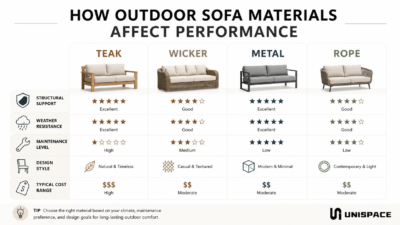
1. How Outdoor Sofa Materials Affect Performance
Outdoor sofas are exposed to sunlight, rain, humidity, temperature changes, loading stress, cleaning chemicals, and repeated daily use. Material choice affects the product in four main ways: structural strength, surface durability, comfort, and total cost of ownership.
A sofa may look like wood, wicker, rope, or fabric, but the hidden structure often decides how well it performs. Many outdoor wicker sofa and rope outdoor sofa designs use a steel or aluminum frame underneath the decorative weaving. This means that the quality of welding, frame geometry, pretreatment, powder coating, drainage, and hardware can be just as important as the visible material.
For buyers, the best material is not the most expensive one. It is the material system that matches the target market, climate, price point, maintenance expectation, and project usage frequency.
2. Teak Outdoor Sofas: Advantages and Limitations
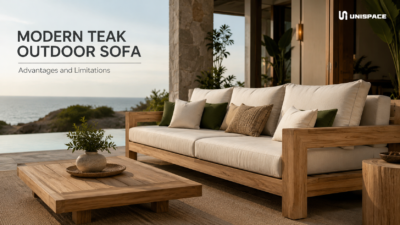
A teak outdoor sofa is often chosen for its warm natural appearance and premium positioning. Teak is a dense hardwood with natural oils that help it resist moisture and insects better than many other woods. In furniture production, teak is commonly associated with high-end residential terraces, resorts, and luxury hospitality spaces.
The main advantage of teak is its timeless look. A modern teak outdoor sofa can create a relaxed but upscale atmosphere, especially when paired with neutral cushions, metal accents, or rope details. Teak also feels warmer to the touch than metal under direct sun.
However, teak has limitations. It is heavier than many metal-frame alternatives, the material cost is usually higher, and the color changes over time. If left untreated, teak naturally weathers into a silver-gray tone. Some customers like this patina, while others expect the original golden color and therefore need regular cleaning and oiling.
For wholesale buyers, teak can be attractive, but it requires careful sourcing, stable wood quality, moisture control, and packaging protection to avoid cracking, deformation, or surface damage during transport.
3. Wicker Outdoor Sofas: Natural vs. Synthetic Wicker
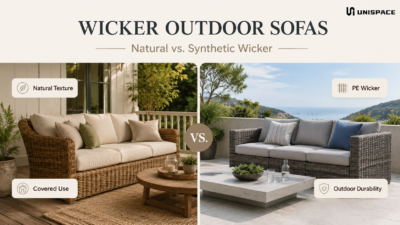
A wicker outdoor sofa is popular because it looks relaxed, comfortable, and familiar to many outdoor furniture markets. The word wicker describes the weaving style rather than one specific material. Natural wicker is made from plant fibers, while most modern outdoor wicker sofa products use synthetic PE rattan over a metal frame.
Natural wicker is beautiful but not ideal for long-term exposed outdoor use. It can absorb moisture, crack, mold, or become brittle under strong sun and rain. For this reason, synthetic wicker is more common in export outdoor furniture.
PE rattan is lightweight, flexible, and available in many colors and textures. It can imitate natural rattan while providing better moisture resistance and easier cleaning. For retail and hospitality programs, synthetic wicker also allows more consistent production and easier color matching.
The important point is that wicker itself is rarely the structural core. Most wicker sofas rely on a steel or aluminum frame inside. If the internal frame is weak, poorly coated, or badly welded, the sofa may fail even when the weaving still looks acceptable.
4. Metal Outdoor Sofas: Steel vs. Aluminum Frames
Metal outdoor sofas are valued for structure, stability, and manufacturing flexibility. For B2B buyers, metal frames also support efficient mass production, repeatable dimensions, and modular designs.
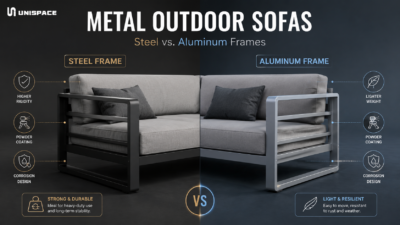
Steel and aluminum each have different advantages. Steel has high strength and rigidity, which makes it suitable for slim frames, stable seating structures, and commercial projects where durability and cost control matter. A properly designed outdoor sofa iron or steel frame can support powder coating, rope weaving, cushion systems, and modular construction.
Aluminum is lighter and naturally resistant to red rust. It is useful for coastal areas, projects that require frequent movement, or furniture with a premium lightweight feel. However, aluminum is generally less stiff than steel, so larger tube sections or additional reinforcement may be required to achieve similar stability.
In our manufacturing experience, the most reliable result comes from matching the frame material with the application. Steel works well where strength, wind stability, and cost efficiency are important. Aluminum works well where weight and corrosion resistance are priorities. In both cases, coating quality, drainage, welding accuracy, and packing protection remain critical.
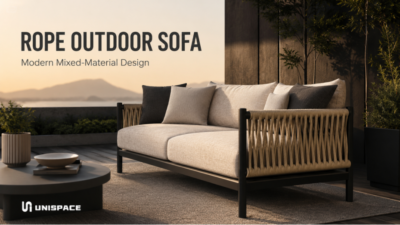
5. Rope Outdoor Sofas and Modern Mixed-Material Designs
A rope outdoor sofa has become popular in modern outdoor collections because it combines a softer handmade look with a clean architectural frame. Rope details can be used on backrests, side panels, arms, or decorative accents.
Outdoor rope should be selected for UV resistance, moisture resistance, tension stability, and colorfastness. Poor-quality rope can stretch, fade, or collect dirt quickly. Good rope design also requires correct spacing, stable anchor points, and consistent tension during assembly.
Most rope sofas still depend on a metal frame for real structure. This is where manufacturer capability matters. Tube bending, welding fixtures, smooth grinding, powder coating, and precise hole placement all affect the final appearance and durability.
Mixed-material designs can also include wood-look slats, PE wicker, aluminum arms, steel bases, ceramic-look tabletops, and quick-dry cushions. These combinations help brands create a modern look while maintaining practical production and cost control.
6. Weather Resistance Comparison
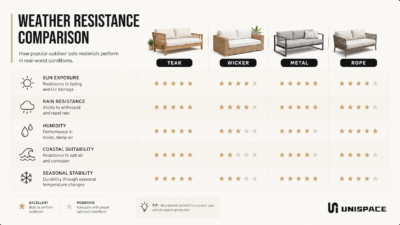
Weather resistance is not about one material alone. It depends on the complete product system.
Teak naturally resists moisture better than many woods, but it still changes color and needs periodic care. Synthetic wicker performs better than natural wicker outdoors, but UV quality and weaving tension matter. Rope can work well when made from outdoor-grade fibers and installed with the right tension. Metal frames can last for many years if the pretreatment, powder coating, drainage, and touch-up system are properly controlled.
For highly exposed environments such as poolside areas, rooftops, beachfront restaurants, or rainy climates, buyers should pay special attention to water drainage, cushion drying speed, foot caps, screw hardware, and coating coverage at welds and tube ends.
A practical specification may include exterior polyester powder coating of about 60-100 microns, stainless or coated hardware where required, replaceable foot glides, and cushion materials designed to release water quickly. These details often decide whether the sofa remains attractive after one season or performs well over several years.
7. Maintenance and Product Lifespan
Every outdoor sofa material requires maintenance. The difference is how much, how often, and what type.
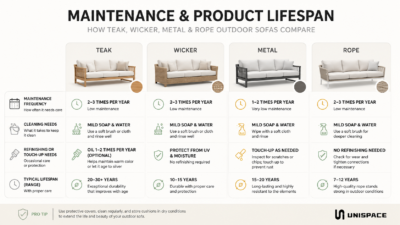
Teak usually needs periodic cleaning. If the customer wants to preserve the golden color, oiling or teak-specific maintenance products may be required. Without maintenance, teak will age naturally into gray.
Synthetic wicker and rope should be cleaned with mild soap and water. Buyers should avoid harsh solvents, abrasive tools, and pressure washing too close to the surface. Weaving should be inspected for loose strands, broken tension points, and dirt accumulation.
Metal frames should be washed regularly, especially in coastal or poolside environments. Scratches should be repaired early before corrosion spreads under the coating. Drainage holes should remain open, and damaged foot glides should be replaced.
Typical outdoor product life varies widely by climate, usage frequency, storage, and maintenance. In general, commercial projects need more frequent inspection than residential patios because the furniture is used by many people every day.
8. Cost Comparison for Wholesale Buyers
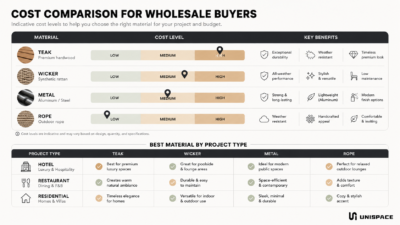
Wholesale buyers should compare more than the unit price. The real cost includes material cost, manufacturing complexity, packing volume, loading efficiency, after-sales risk, and expected replacement rate.
Teak usually sits in a higher cost range because of raw material price, weight, and finishing requirements. It can support a premium retail position but may not fit all price-sensitive markets.
Synthetic wicker often offers a strong balance between appearance and cost. However, labor time for weaving and the quality of the inner frame can significantly affect the final price.
Metal sofas, especially powder-coated steel designs, can be cost-effective for commercial and wholesale programs. They support repeatable production, strong structure, efficient packaging, and a wide range of finishes. Aluminum frames usually cost more than steel but reduce weight and improve red-rust resistance.
For brands building a product line, a mixed-material strategy can be useful: teak for premium collections, wicker for classic outdoor comfort, rope for modern design, and metal-frame sofas for scalable commercial programs.
9. Which Material Is Best for Hotels, Restaurants and Residential Projects?
For hotels and resorts, appearance, guest comfort, cleaning frequency, and replacement planning are all important. Teak creates a premium natural feel, while rope and wicker offer a relaxed resort atmosphere. Metal frames provide stability and can be designed for high-traffic spaces.
For restaurants and cafés, space efficiency, easy cleaning, durability, and stacking or modular possibilities may matter more than premium materials. Powder-coated metal frames with rope, wicker, or cushion options can be practical.
For residential patios, the best choice depends on lifestyle. Homeowners who love natural aging may prefer teak. Customers who want low-maintenance comfort may prefer synthetic wicker. Buyers who like a clean contemporary look may choose rope and metal combinations.
For e-commerce, packaging size and assembly complexity are especially important. KD structures, carton strength, cushion compression, and replacement parts should be considered during development.
10. How to Select an Outdoor Sofa Manufacturer
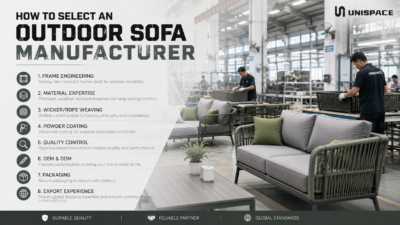
A reliable outdoor sofa manufacturer should understand both design and production. Buyers should not evaluate a supplier only by product photos. Ask about frame material, wall thickness, welding method, pretreatment, powder coating, weaving material, cushion foam, fabric performance, packing method, and quality-control process.
For wicker or rope sofas, confirm the internal frame structure and whether the weaving is only decorative or also functional. For teak sofas, ask about wood grade, moisture control, joint construction, and finishing method. For metal sofas, review tube dimensions, weld quality, drainage design, coating thickness, curing control, and salt or humidity testing if required.
Good manufacturers identify problems before mass production. They consider whether the sofa is comfortable, stable, weather-ready, efficient to pack, and suitable for the buyer’s target market. For OEM and ODM projects, early manufacturing feedback can reduce product risk and improve long-term value.
11. Final Recommendation
There is no single best outdoor sofa material for every project. A teak outdoor sofa is strong for premium natural design. A wicker outdoor sofa is attractive for relaxed comfort and familiar retail appeal. A rope outdoor sofa works well for modern mixed-material collections. Metal sofas provide structural strength, design flexibility, and scalable production advantages.
The most practical choice depends on climate, project type, customer expectations, maintenance level, and price positioning. For many modern outdoor sofas, the real answer is not teak, wicker, or metal alone, but a well-engineered material system: a reliable frame, suitable surface protection, outdoor-grade weaving or fabric, good cushion drainage, and packaging designed for export.
For buyers, the smartest approach is to choose the material that fits the market, then work with a manufacturer who understands the full structure behind the appearance.