Types of Outdoor Metal Chairs: Which Styles Fit Your Market Best?

Types of Outdoor Metal Chairs: Which Styles Fit Your Market Best?
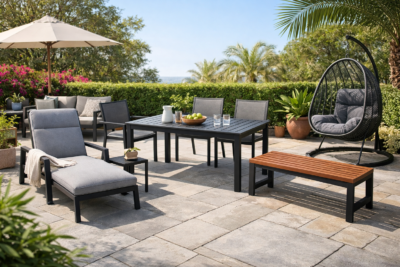
For B2B buyers, “outdoor metal chair” is not a single product category. It is a group of seating solutions with very different frame structures, space requirements, comfort levels, packaging methods, and target markets. From a manufacturer’s perspective, the right category decision affects not only product appearance, but also material cost, welding complexity, surface treatment, loading quantity, and after-sales risk.
That is why chair type planning matters early in product development. Importers, brands, wholesalers, and project buyers need to evaluate how each chair type performs in real outdoor environments, how efficiently it ships, and whether it fits their channel strategy. In this guide, we introduce the most common types of outdoor metal chairs and explain their applications, structural features, material recommendations, and purchasing considerations.
Why Outdoor Metal Chairs Remain a Strong Category
Metal chairs remain popular because they offer a practical balance of strength, design flexibility, and production efficiency. Compared with bulky upholstered furniture, metal chairs can cover more price points and more sales channels, from e-commerce and retail to hospitality and project supply. They are also easier to standardize for OEM/ODM development because frame dimensions, tube specifications, finishes, cushions, and accessories can be adjusted without rebuilding the entire product logic.
For manufacturers, another advantage is controllability. A well-designed metal chair can be produced with stable tolerances, repeatable welding points, and more predictable packaging performance. This makes metal seating especially attractive for buyers who care about consistency across large orders.
Outdoor Metal Lounge Chairs:Comfort, structure, and sourcing priorities
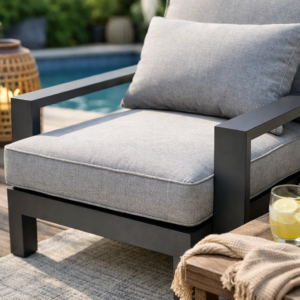
Lounge chairs are designed for relaxed sitting and longer dwell time. They are commonly used in gardens, balconies, villas, patios, resort spaces, and premium retail displays. Their value is not only visual comfort, but also the lifestyle image they create for the end customer.
From a structural standpoint, outdoor metal lounge chairs usually have a lower seat height, a deeper seat angle, and a more open body posture. Many models also include wider armrests, larger back frames, and loose cushions. Because the user sits deeper into the chair, the frame must maintain stability under shifting body weight, so tube thickness, leg geometry, and joint reinforcement matter more than they do in a standard dining chair.
For material selection, powder-coated steel is a good choice for projects that need strong structure and competitive pricing. Aluminum is suitable for premium collections or coastal markets where lower weight and corrosion resistance are priorities. Buyers should also pay attention to cushion drainage, quick-dry foam options, anti-rust pretreatment, and KD structure feasibility if shipping cost is sensitive.
Outdoor Metal Folding Chairs:Space-saving designs for flexible use
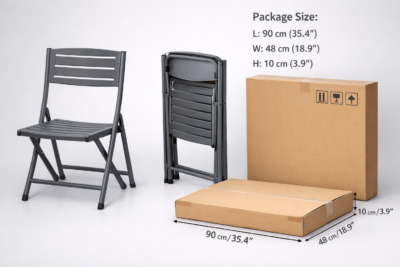
Folding chairs are usually selected for portable, space-saving, and seasonal use. They fit balconies, compact patios, cafés, event spaces, camping-inspired collections, and e-commerce programs where storage efficiency is important. For many buyers, folding chairs are a volume-driven category because they are easier to display, store, and ship.
The key technical point is not simply whether the chair folds, but how securely it folds. Hinge quality, opening angle control, locking consistency, and anti-wobble performance determine whether the product feels reliable in use. If the frame uses fabric or textilene, the attachment method must also be checked carefully because failure often starts at the connection points rather than the tube itself.
For sourcing, we recommend checking cycle testing for opening and closing, corrosion performance of hardware, carton protection at the hinge area, and the actual folded dimensions. A chair that saves even a few centimeters in packed thickness can make a noticeable difference to loading quantity.
Outdoor Metal Benches:For gardens, commercial spaces, and shared seating
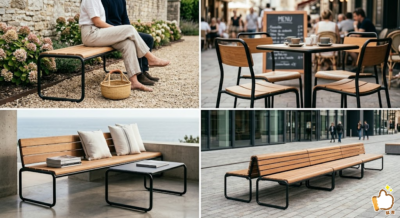
Outdoor metal benches serve a different role from individual chairs. They are often used in gardens, parks, entry areas, walkways, public projects, and hospitality environments where shared seating is needed. Benches can also work well in decorative retail collections when buyers want a statement item rather than a standard chair assortment.
The structural challenge of a bench is span control. Because the sitting length is larger, the frame needs better weight distribution, stronger cross support, and better anti-deformation design. Center support, seat slat spacing, leg position, and frame connection method all influence long-term stability. A bench that looks simple on the outside may still require careful engineering inside the frame.
For commercial and public use, galvanized or well-pretreated powder-coated steel is usually a practical solution. Buyers should ask about load capacity, anti-rust pretreatment, optional anchoring methods, and packaging support at the longer frame sections. Bench products are also more likely to suffer transport damage if edge protection is weak.
Outdoor Metal Hanging Chairs:Visual impact with higher safety requirements
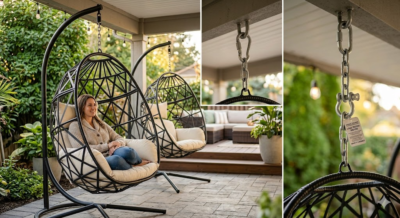
Hanging chairs are a strong visual category for balconies, patios, garden corners, resorts, and lifestyle-focused retail collections. They are often chosen for emotional appeal as much as for function. For this reason, buyers usually evaluate them through a mix of aesthetics, comfort, footprint, and safety.
From a manufacturing perspective, the most critical points are suspension safety, base stability, and balance. The hanging point, welded areas, main tube diameter, and bottom base geometry must be designed as one system. When the chair body includes woven rope, PE rattan, or fabric elements, those materials must match the frame capacity instead of only matching the visual concept.
For purchasing, static load testing, weld consistency, anti-tip performance, and assembly clarity are the first things to review. Hanging chairs can be highly attractive in retail, but they also carry higher safety expectations. A reliable supplier should be able to explain both the design language and the engineering logic behind the product.
Outdoor Metal Dining Chairs:Core seating for retail and hospitality
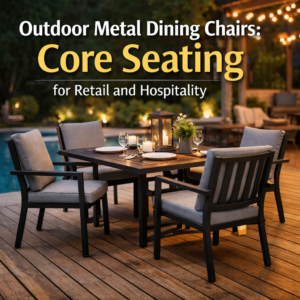
Dining chairs are one of the most commercial outdoor chair categories because they work across homes, cafés, restaurants, hotels, terraces, and dining set programs. They often move in larger volumes and must match table collections, so proportion control and production consistency are especially important.
Structurally, a dining chair needs a more upright sitting posture than a lounge chair, but it still must feel comfortable during meals. Seat height, back angle, arm clearance, leg spread, and stackability are all important variables. For hospitality buyers, stackability and anti-scratch protection are particularly valuable because they influence storage efficiency and daily maintenance.
Powder-coated steel dining chairs are a strong option for durable and cost-effective collections. Aluminum versions are often better for premium projects or markets that place more value on lightweight products and corrosion resistance. Buyers should also confirm table-height compatibility, cushion options, foot cap protection, and the real stacking quantity per carton or pallet.
Stackable and Project-Oriented Metal Chairs:Efficiency-driven solutions for commercial use
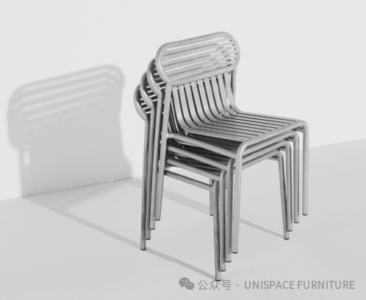
Although not always listed separately in retail catalogs, stackable metal chairs are extremely important in B2B supply. They are widely used in hospitality, cafés, event spaces, rental programs, and large-scale projects where storage density and turnover efficiency matter more than decorative presence alone.
The biggest design task is to make the chair stack efficiently without damaging the finish. This means the frame shape, spacers, foot alignment, and contact points all need to be considered from the beginning. If a chair is technically stackable but scratches easily after repeated use, it will not perform well in commercial channels.
For buyers sourcing project chairs, we recommend focusing on chair weight, stacking height, spacer materials, anti-slip foot caps, and pallet loading efficiency. These details often have a greater impact on total cost of use than styling alone.
Which Materials and Finishes Fit Different Market Needs?
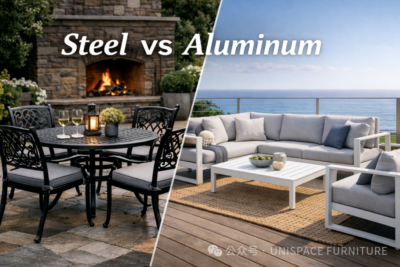
There is no single best material for every outdoor metal chair. The better question is which material system fits the target market, price level, climate, and usage intensity. For value-driven projects, powder-coated steel often provides the right balance between strength and cost. For coastal regions or premium collections, aluminum is often the better choice because it offers lighter weight and stronger corrosion resistance.
Finish quality is just as important as base material. Good pretreatment, clean welding, smooth grinding, consistent powder coating, and proper curing all affect outdoor durability. From a sourcing perspective, buyers should evaluate the full manufacturing process instead of stopping at the question of whether the chair is made from steel or aluminum.
How Should B2B Buyers Build the Right Chair Mix?
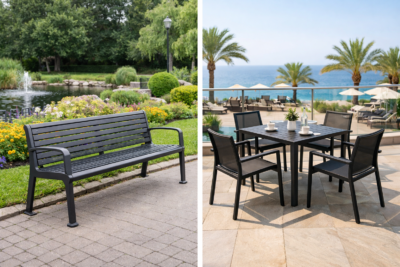
A successful product line usually includes more than one chair type. Wholesalers may combine dining chairs with benches and lounge chairs to build a fuller outdoor assortment. E-commerce sellers may focus more on folding models or compact KD structures to reduce shipping costs. Project buyers are more likely to prioritize stackable dining chairs and benches with stronger specifications. The right mix depends on channel, price point, usage scenario, and packaging strategy.
This is also where manufacturer support becomes valuable. A factory with metal frame experience can help buyers adjust tube specifications, improve KD structures, optimize packaging, align product language across a collection, and avoid preventable sampling mistakes. Clear communication about usage conditions and target pricing early in the process usually saves time later.
OEM/ODM Development: What Should Buyers Discuss First?
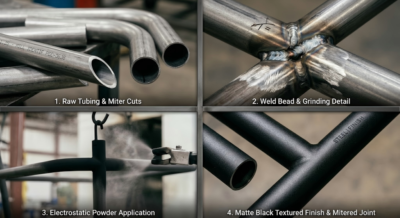
In outdoor chair development, OEM/ODM is not only about changing appearance. Real development work often includes frame proportion adjustment, material replacement, folding or stacking optimization, cushion updates, packaging redesign, and finish selection based on market requirements. A supplier that understands both design intent and production constraints can make this process far more efficient.
For buyers, the best way to start is to share the target market, expected retail level, usage scenario, and preferred packaging direction as early as possible. When the brief is clear, a manufacturer can usually identify the most suitable chair type and structure before sampling even begins.
FAQ
Which outdoor metal chair type is best for retail collections?
There is no universal answer, but lounge chairs and dining chairs usually perform well because they combine clear visual appeal with broad usage potential. The best choice still depends on whether the collection is aimed at home retail, decorative display, or hospitality supply.
Is steel or aluminum better for outdoor chairs?
It depends on the market need. Steel is often better for structure and cost control, while aluminum is better for lightweight positioning and corrosion resistance. The correct decision should be based on climate, price point, and product positioning.
What should buyers check when sourcing folding or hanging chairs?
For folding chairs, focus on hinge durability, locking consistency, and folded dimensions. For hanging chairs, focus on load testing, weld safety, base stability, and clear assembly guidance.
Are stackable chairs important for commercial projects?
Yes. In hospitality and project supply, stackability affects storage density, transportation efficiency, labor convenience, and long-term maintenance cost. It is a commercial factor, not just a product feature.
Can manufacturers support custom development for outdoor metal chairs?
Yes. Experienced manufacturers can support OEM/ODM development in frame design, size adjustment, finish options, cushion programs, packaging optimization, and collection-level coordination.
Need Support for Your Outdoor Chair Collection?
If you are building an outdoor seating collection and need a reliable metal frame furniture manufacturer, it helps to choose the right chair type, structure, and material system from the beginning. The value of a professional supplier should go beyond pricing and help turn product ideas into practical, scalable, export-ready solutions.
Contact us to discuss your target market, product concept, OEM/ODM requirements, and packaging goals.